Lincoln County Farm And Equipment Buildings
Stanford Metal Roof Coating
We coat commercial metal roofs in Stanford, including farm supply, equipment, and storage buildings where lean-to additions and open ridge vents need their own plan.
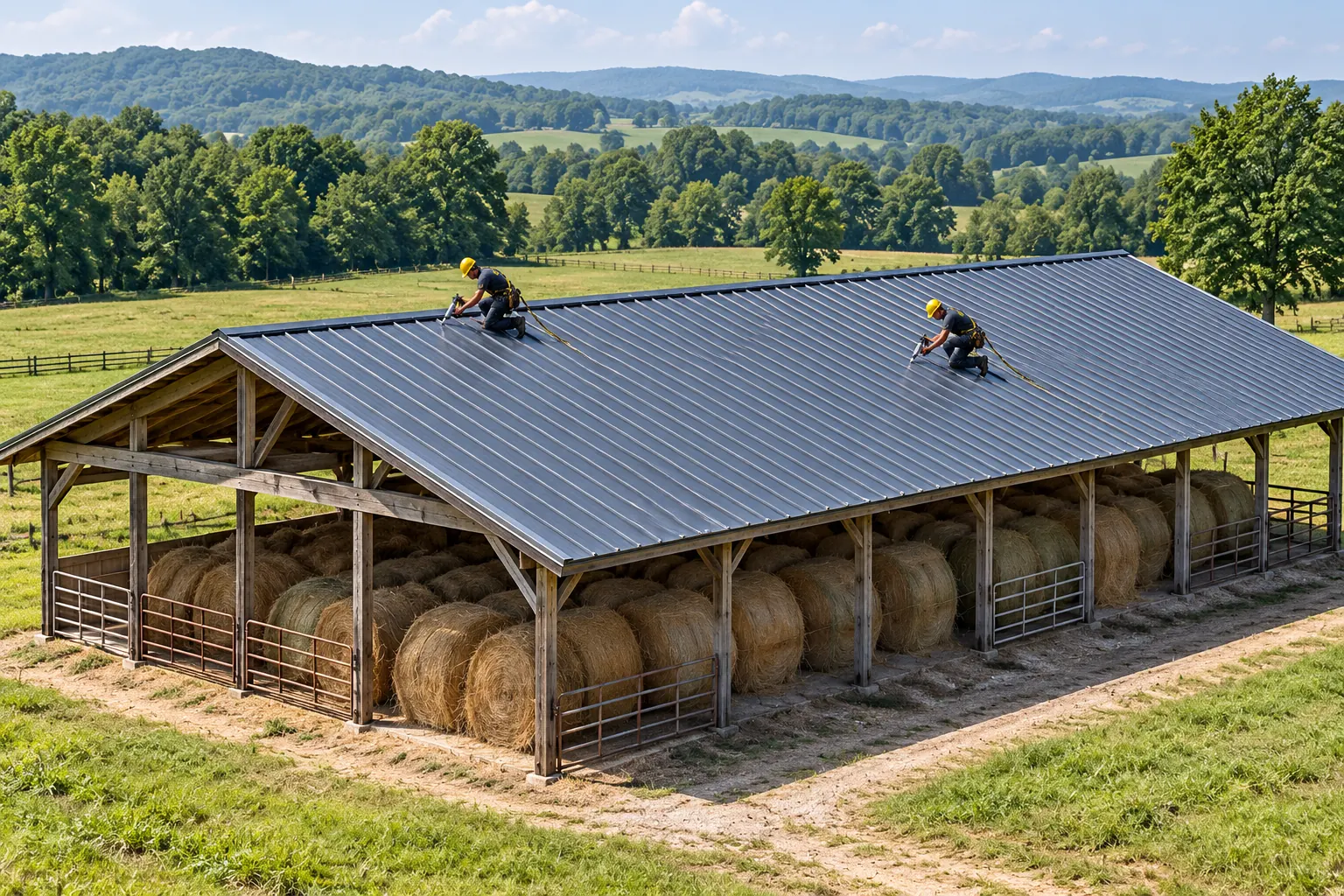
Lean-Tos, Ridge Vents, And Chaff
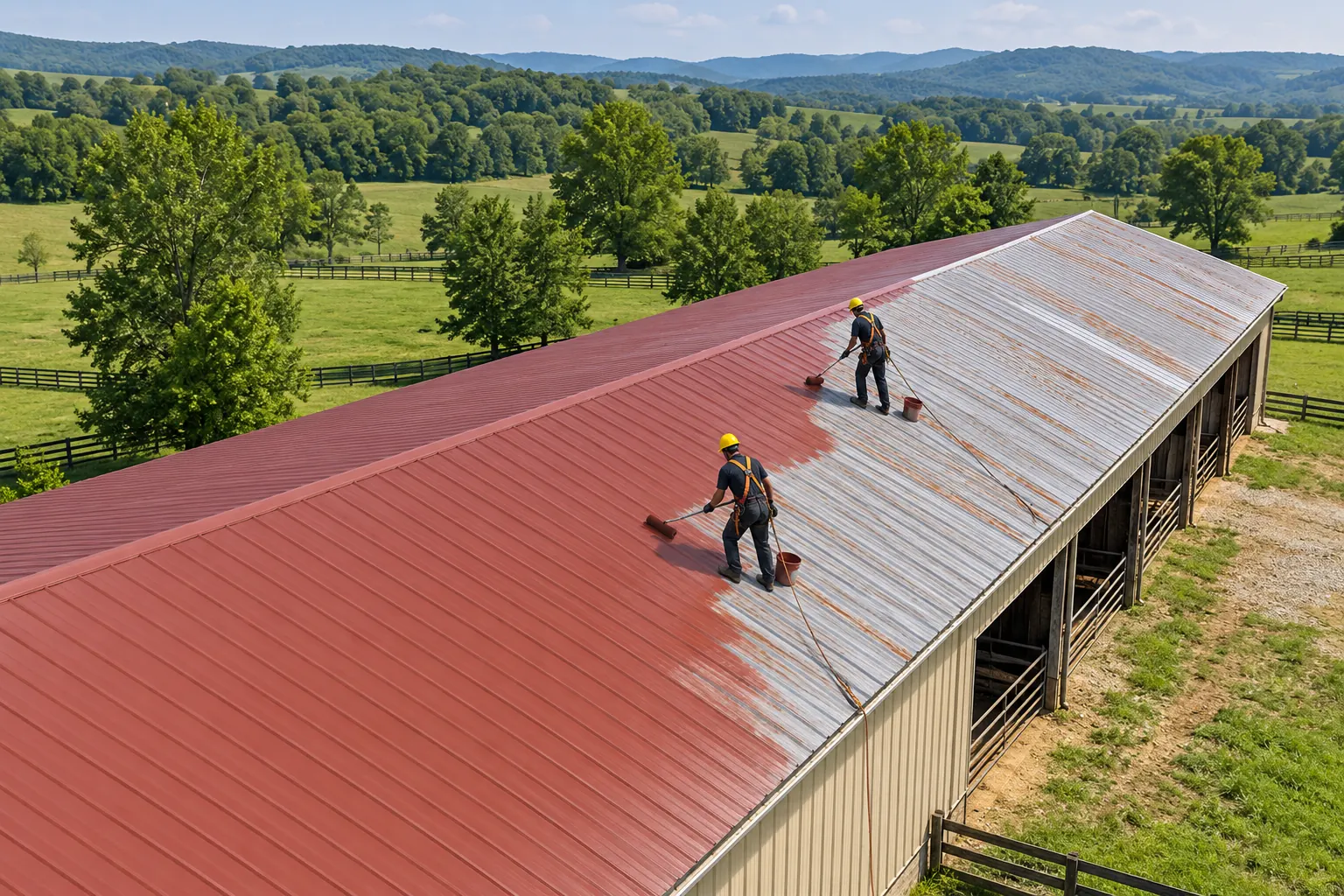
Farm and equipment buildings around Stanford seldom stop at one roof. A lean-to added along the side sits at a lower pitch and drains slower than the main roof, and the ridge often carries an open vent that has to keep breathing.
- The joint where the lean-to meets the main wall
- Open ridge vents kept clear of coating
- Gutters packed with chaff and grain dust
- Fiberglass skylight panels in barn roofs
- City of Stanford and Lincoln County permit contacts
Stanford Farm Building Roof Zones
Barns and equipment sheds wear differently from a downtown storefront. These five zones decide the prep on a Stanford roof.
Lean-To Transition
The flashing where a lean-to roof tucks under the main wall panels takes the runoff of both roofs. Gaps there get fabric and mastic before any coating crosses the joint.
Low-Pitch Lean-To Field
Shallow lean-to panels hold water at their end laps longer than the steeper main roof. That section often gets silicone while the main slope takes a different topcoat.
Open Ridge Vents
Ridge vents on hay and equipment barns let moisture escape, so they stay open. The crew masks the vent openings and coats the ridge cap around them.
Chaff-Packed Gutters
Chaff and grain dust settle into gutters and hold water like a sponge. Cleaning them out comes first, then rust treatment and coating where the steel is firm.
Barn Skylight Panels
Translucent panels in barn roofs crack and yellow with age. They get replaced, covered with metal, or sealed at the edges and left uncoated so light still comes through.
Benefits of Coating Your Roof
On a farm or equipment building with firm steel, coating brings these gains while everything stored below stays put.
Keep The Barn Steel
Keeping firm barn steel and adding a coating spends the money on screws and topcoat instead of new panels and the labor to hang them.
Storage Stays In Place
Hay, equipment, and inventory stay where they are, since the work happens on top of the roof.
Less Steel Hauled Off
Panels with their thickness intact stay on the building instead of heading to the landfill.
Recoat When It Dulls
Once sealed, the roof can be washed and recoated later, which spreads the upkeep over many seasons.
Commercial Roof Coating Options for Stanford
Most Stanford buildings we see take one of these three routes, and some take two on one building.
Metal Roof Coating
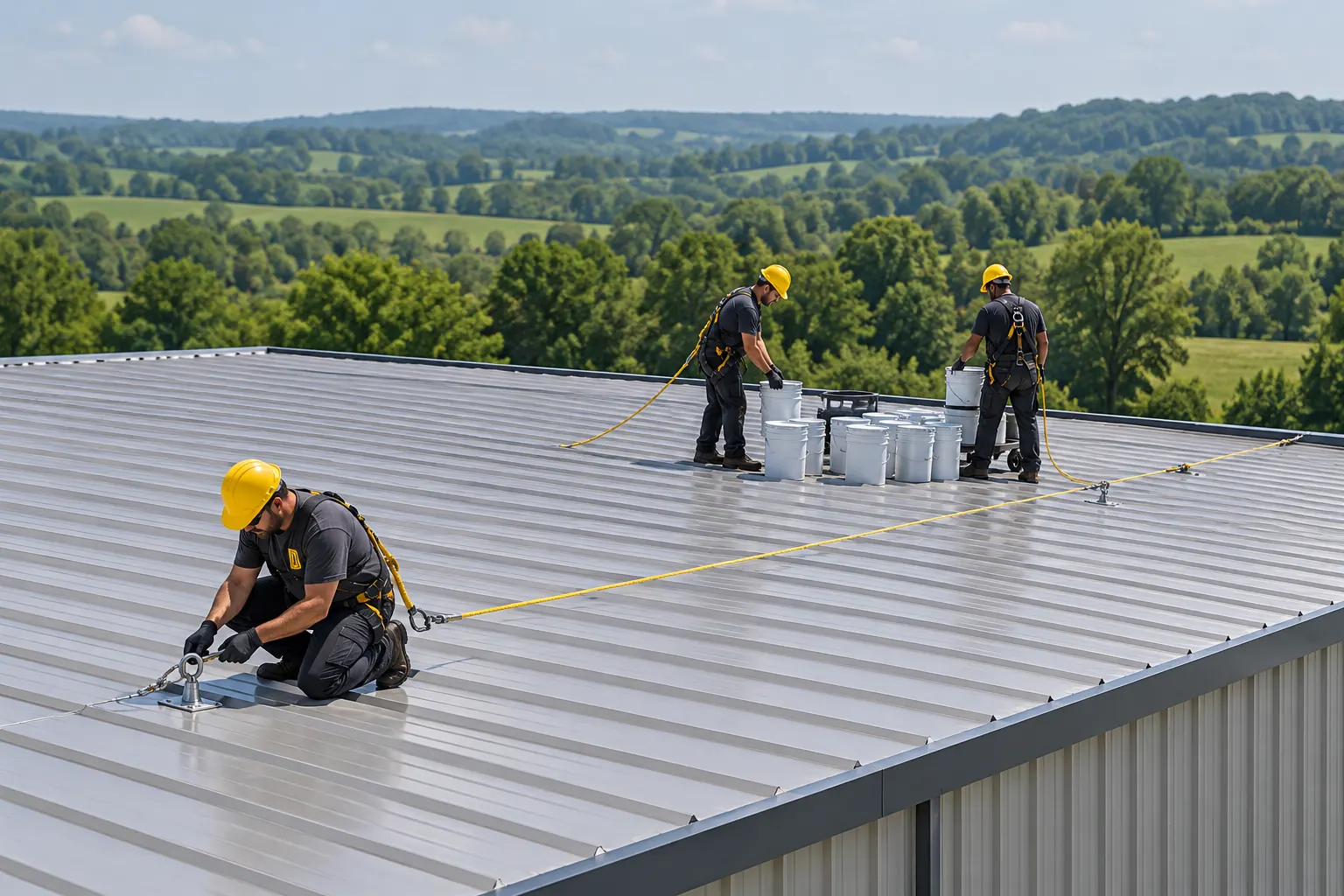
The main barn or shop roof gets screws reset, laps sealed, rust primed, and a full topcoat, with the ridge vent left open.
Commercial metal roof coating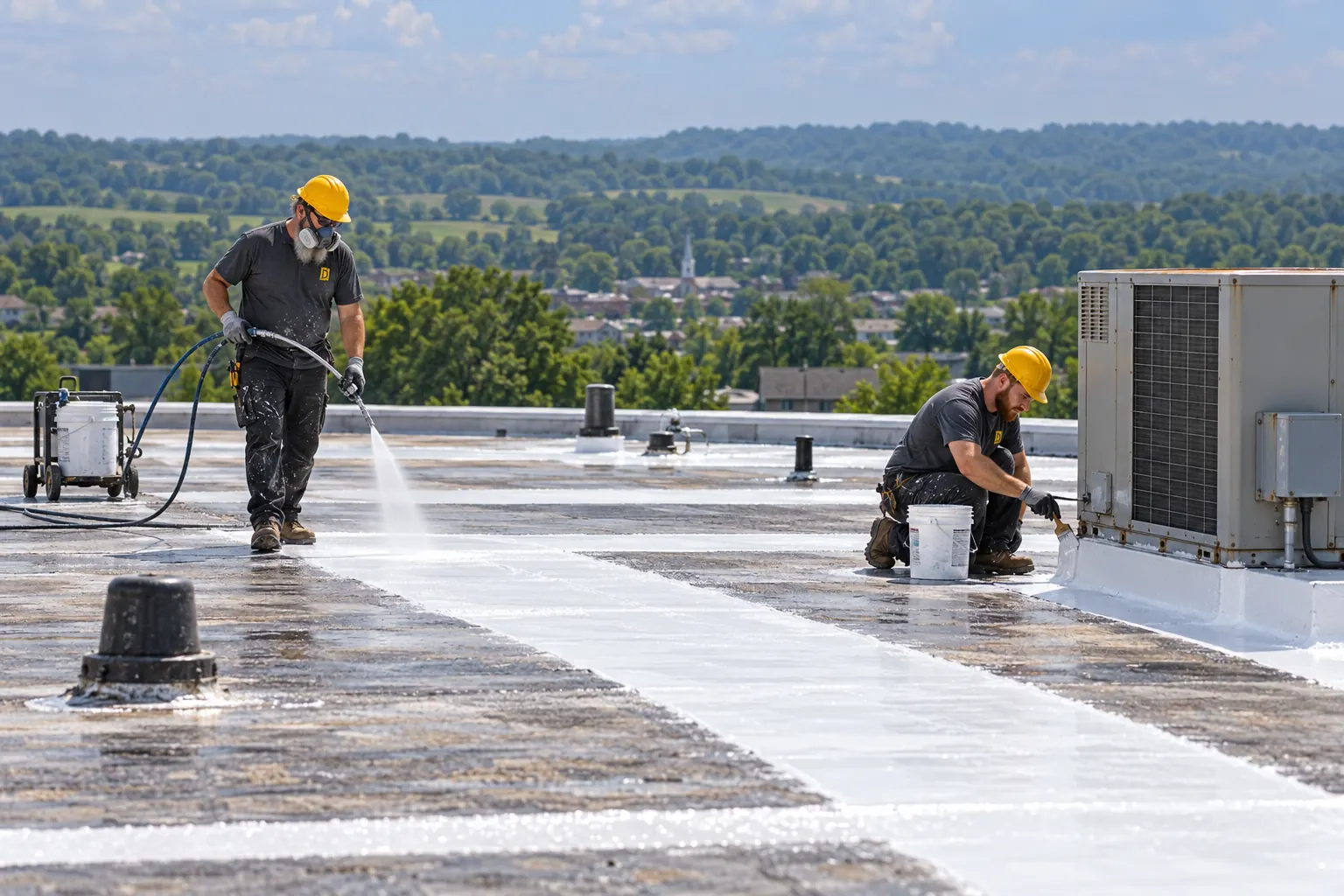
Silicone Roof Coating
Low-pitch lean-to sections that hold water get silicone over fabric-sealed laps.
Silicone roof coating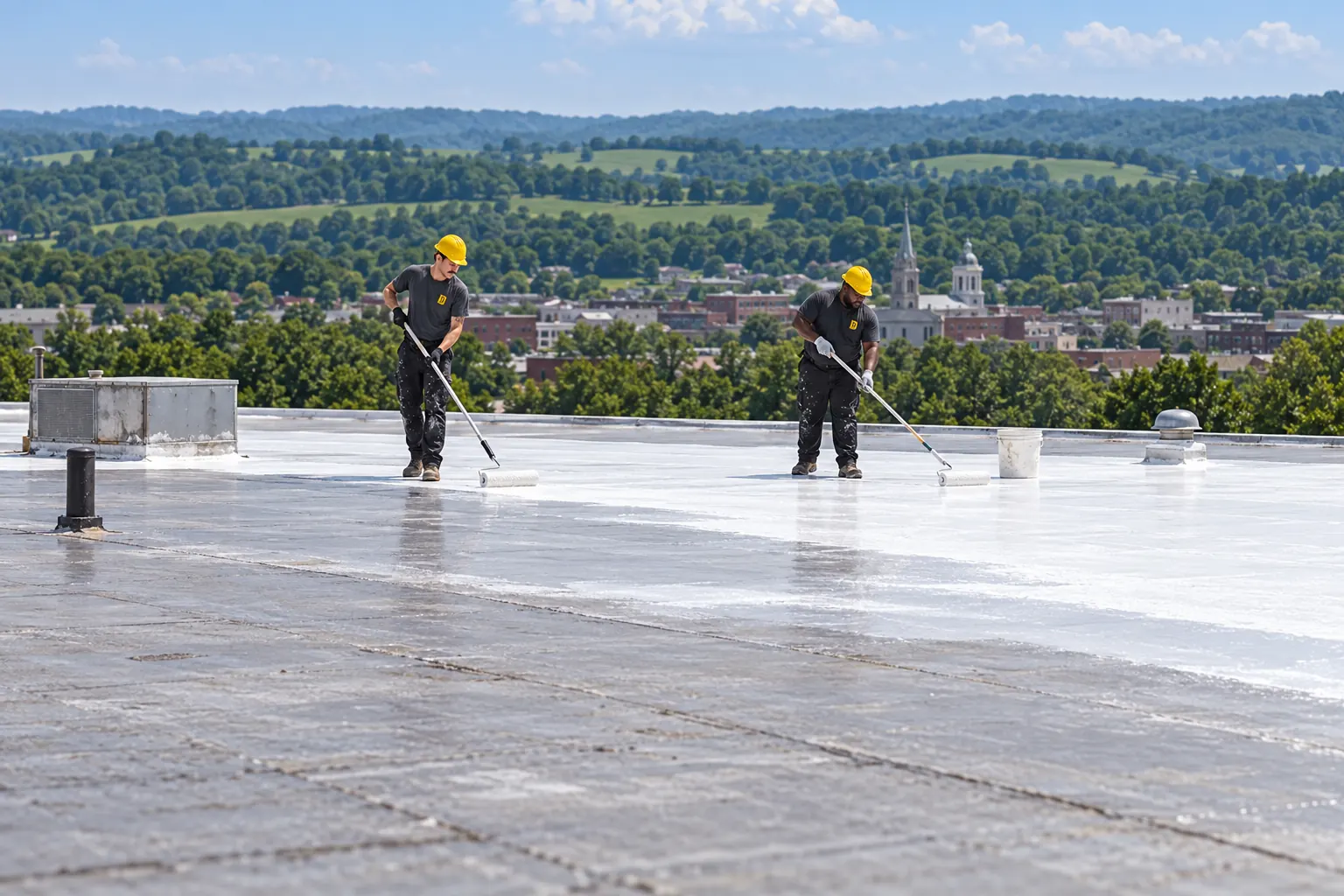
Acrylic Roof Coating
Steeper main roofs that shed water well take a bright white acrylic that keeps sunlit panels cooler.
Acrylic roof coating
Leak Showing Up Where The Lean-To Joins?
That joint is the usual suspect on Stanford farm buildings. Mention it when you call, along with any ridge vents or skylight panels.
Have These Ready
- Photos of the lean-to joint
- Ridge vent type, if known
- Skylight panel count
- What is stored below
Or dial (859) 204-8078
Coating A Stanford Barn Or Shop Roof
Five steps, adjusted for buildings with more than one roof pitch and a ridge that has to breathe.
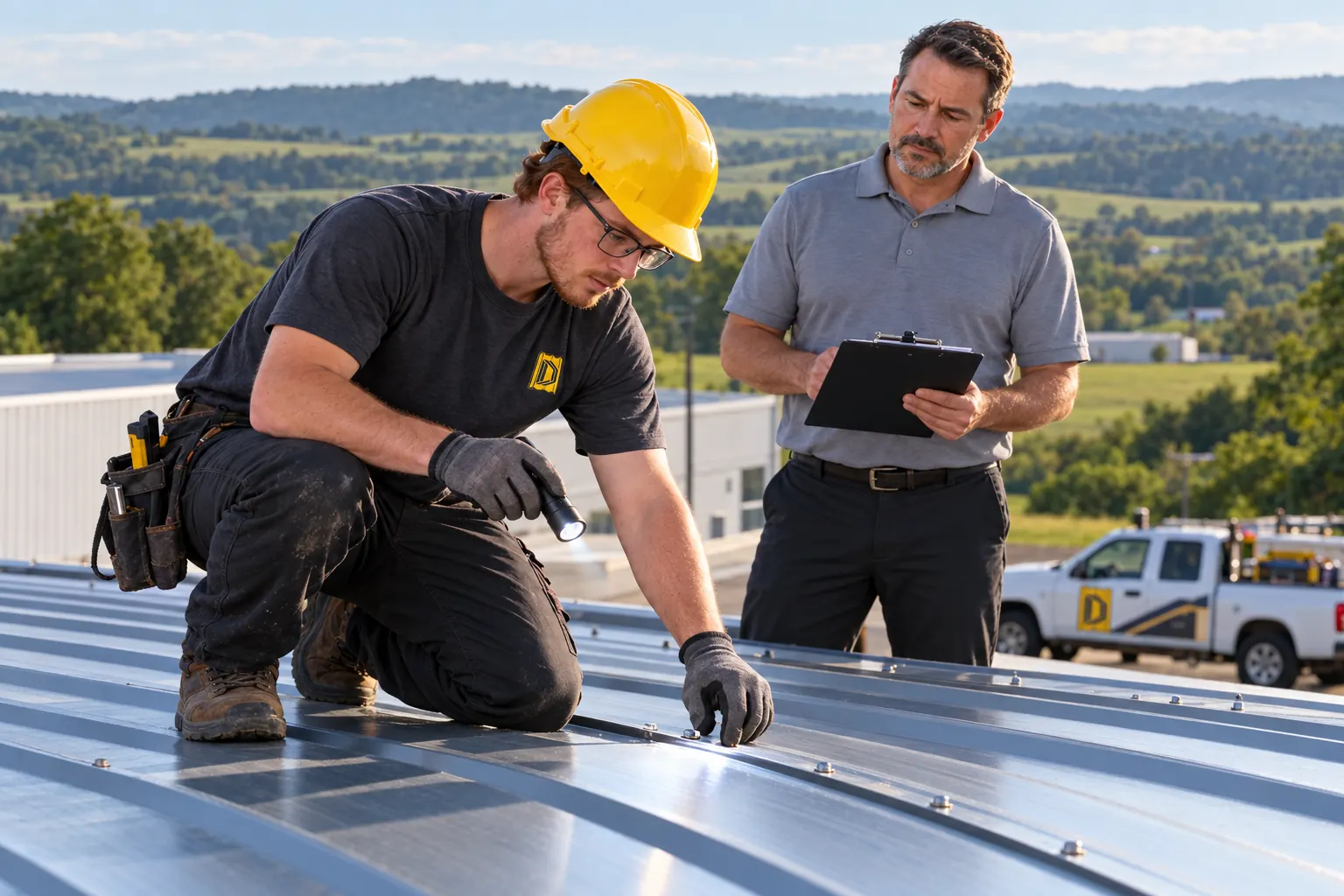
Inspect Your Roof
We walk the main roof and every lean-to, check the joint between them, look at the ridge vent, count skylight panels, and note chaff in the gutters. Photos go to you afterward.
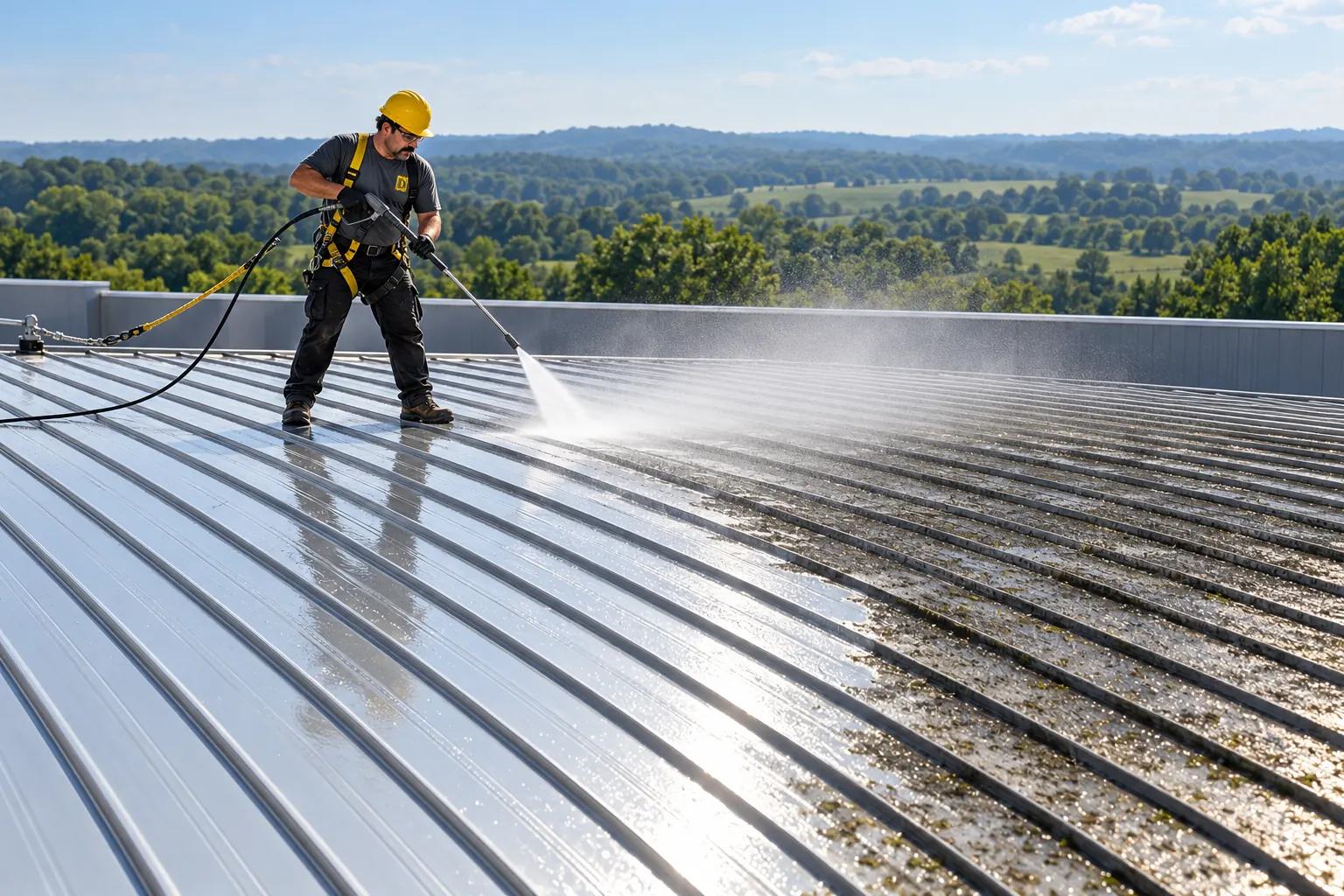
Clean Out And Wash
Gutters get cleared of chaff and grain dust, then the panels are pressure washed. Bird droppings and dust come off before the steel dries.
Prime And Repair
Rusted spots get primer, stripped screws get replaced, and skylight panels are swapped, covered, or edge-sealed. The lean-to joint gets fabric and mastic.
Mask The Ridge Vent
Open ridge vents are masked so airflow keeps working after the coating. Ridge caps around them get sealed by hand.
Coat Each Roof Section
The main roof and the lean-to each get the topcoat that fits their pitch, applied to its own thickness and checked with a wet film gauge.
Nearby Towns We Work In
From Stanford, the same coating service reaches Danville, Harrodsburg, and Junction City.
Farther out in Lincoln County? Call us or send us a message about the roof.
Harrodsburg
Low, damp Mercer County sites where the eave band and the gutters decide the scope.
Harrodsburg metal roof coatingJunction City
Heated shops in Boyle County, checked inside and out for condensation before coating.
Junction City metal roof coatingDanville
Larger plants and warehouses where long panel runs get coated in planned zones.
Danville metal roof coating
Stanford Metal Roof Coating Questions
What happens to skylight panels, gutters and ridge caps during coating?
Skylight panels get replaced or sealed at the edges and left uncoated so light still passes, and many barn owners swap old yellowed panels or cover them with metal.
Gutters get cleaned, rust-treated, and coated inside when the steel is firm. Ridge caps get new closures or mastic where wind lifted them, and each ridge screw is checked before the topcoat.
Does a metal roof need to be pressure washed before coating?
Every time. Dirt, chalk, pollen, and loose rust stop primers and coatings from bonding, and Stanford farm buildings add dust, bird droppings, and equipment exhaust. Washing also exposes pinholes, thin metal, and cracked lap sealant.
Chalked paint gets detergent, white rust gets scrubbing, oily spots get degreaser, and mildewed north slopes get a mildew wash, then the panels dry fully.
Where does a Stanford building owner get a roofing permit?
Inside city limits, check with both the City of Stanford, which posts its own building permit application, and the Lincoln County building inspector, whose office the HBC contact sheet places at the Lincoln County Health Department in Stanford.
Outside city limits, start with the county inspector. Bring a roof plan with panel runs and skylight panels marked, the coating data sheet, and photos of rusted laps.
Which utilities serve Stanford and Lincoln County metal buildings?
Lincoln County businesses get electricity from Inter-County Energy, Jackson Energy, or South Kentucky RECC, according to the East Kentucky Power Cooperative member list. The provider on your bill is the one to ask about efficiency programs.
It matters most on uninsulated equipment sheds, shops, and farm supply stores, where a reflective white topcoat lowers the temperature of sunlit panels.
Can a hay barn roof be coated with hay stored inside?
Yes. The work happens on top of the panels, so stored hay and equipment stay in place. Skylight areas get covered inside when panels are replaced, and wash water is directed off the eaves away from open bays.
Spraying stops in wind so mist stays off the stored material, and rolling takes over on breezy days.
Plan Coating For Your Stanford Building
Request a free ballpark estimate, or call about the lean-to, the ridge vent, and the gutters.