Five Coating Systems, One Inspection First
Danville Commercial Roof Coating Services
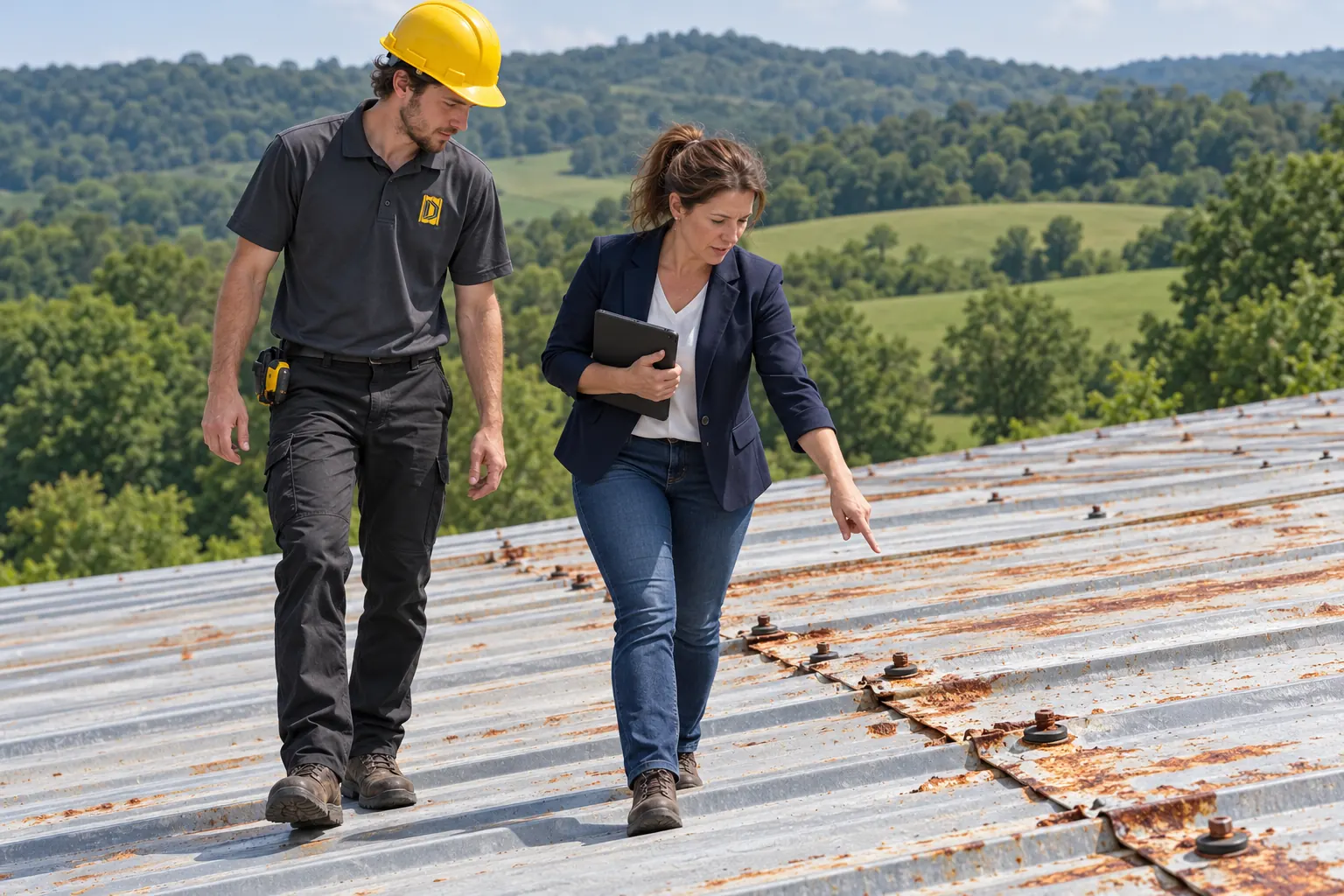
Our commercial roof coating services in Danville cover five systems. The roof walk decides which one fits, starting with the panels, laps, and drainage you already have.
Commercial Roof Coating Services In Danville
Each system answers a different roof. Metal coating is the core of the work; the other four cover slow drainage, summer heat, missing insulation, and shingles.
Metal Roof Coating
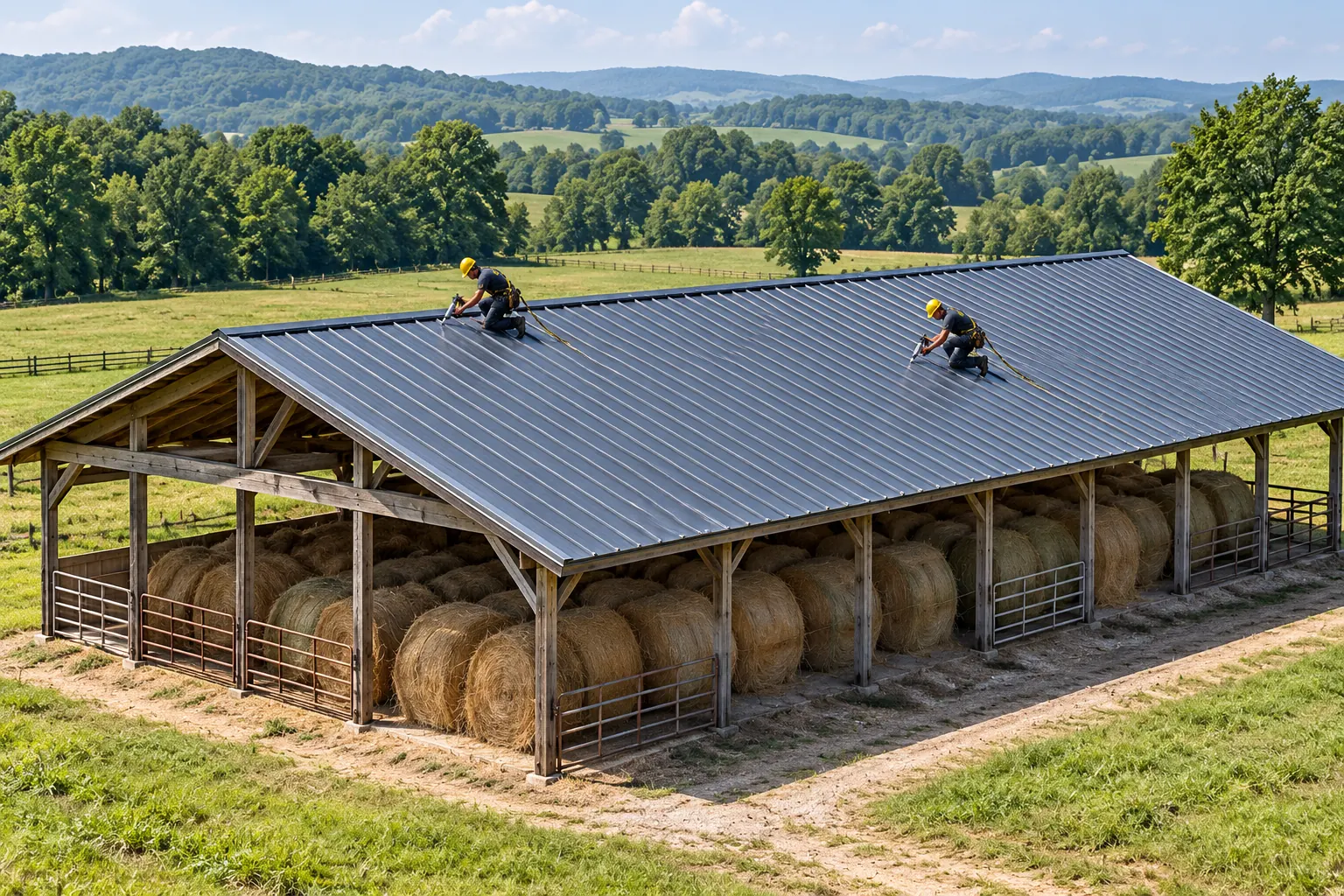
R-panel, standing seam, and corrugated roofs on plants, shops, and barns. Screws, laps, and rust get repaired, then a full topcoat seals the panels from ridge cap to gutter.
Danville commercial metal roof coating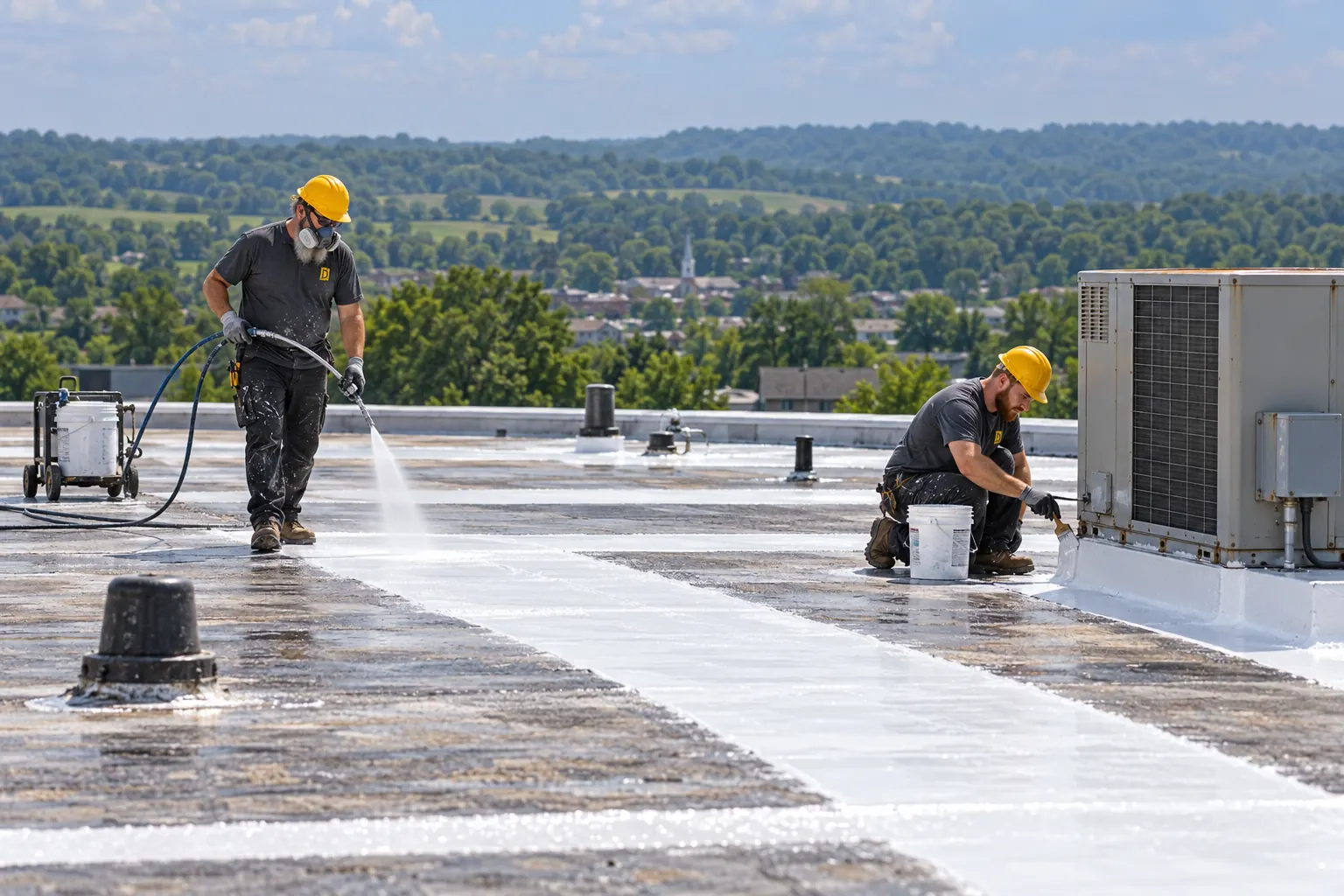
Silicone Roof Coating
Low-pitch and flat roofs where water sits in gutters, valleys, and laps. Silicone resists standing water, cures on cooler days, and takes fresh silicone when it needs a recoat.
Danville silicone roof coating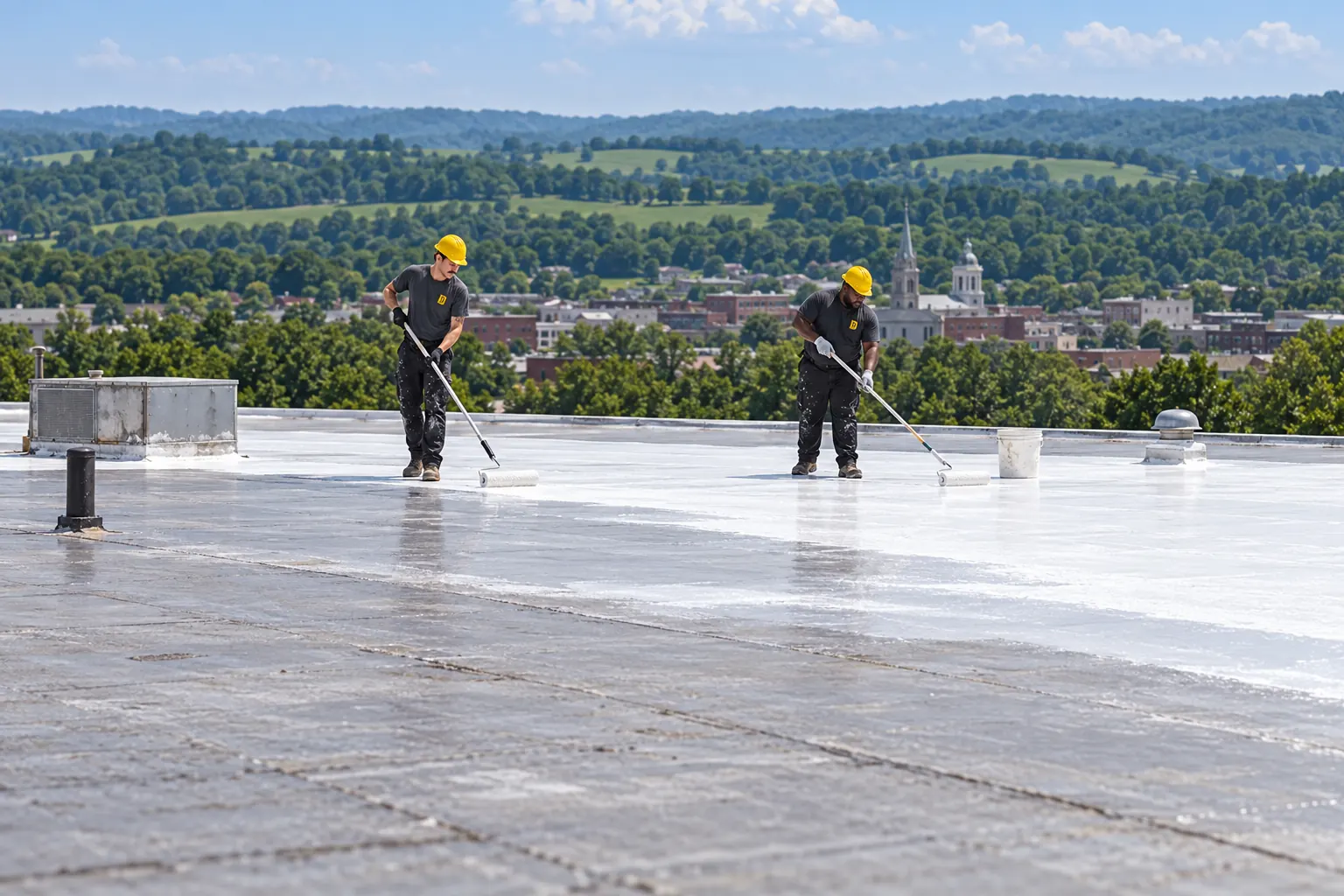
Acrylic Roof Coating
Steeper metal roofs that drain fast and run hot. A bright white acrylic finish stays clean, keeps sunlit panels cooler, and takes another acrylic coat years later.
Danville acrylic roof coating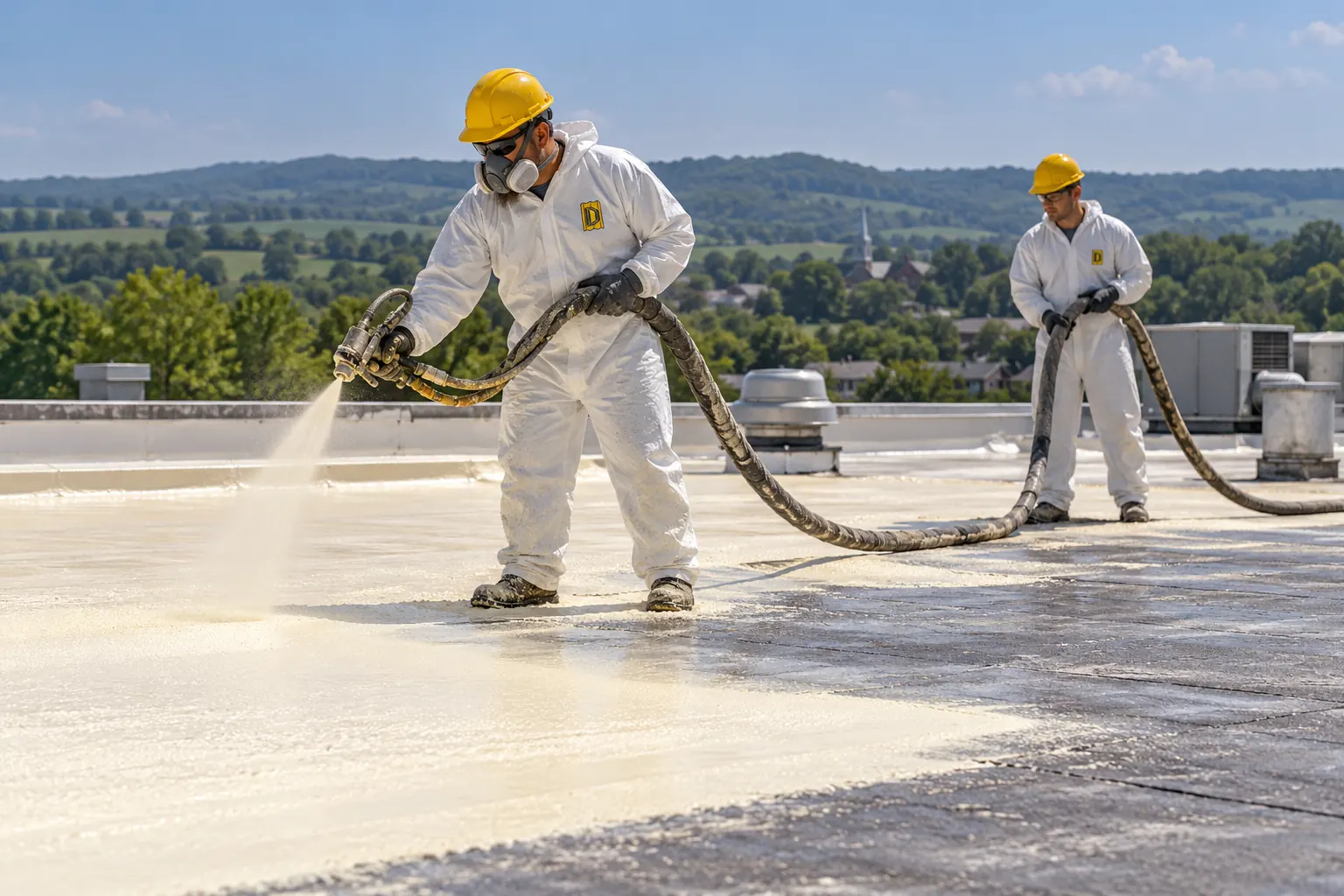
Spray Foam Roofing
Uninsulated metal buildings that leak at screws and laps. Closed-cell foam adds insulation, buries the fasteners and laps, and gets a protective topcoat against sunlight.
Danville spray foam roofing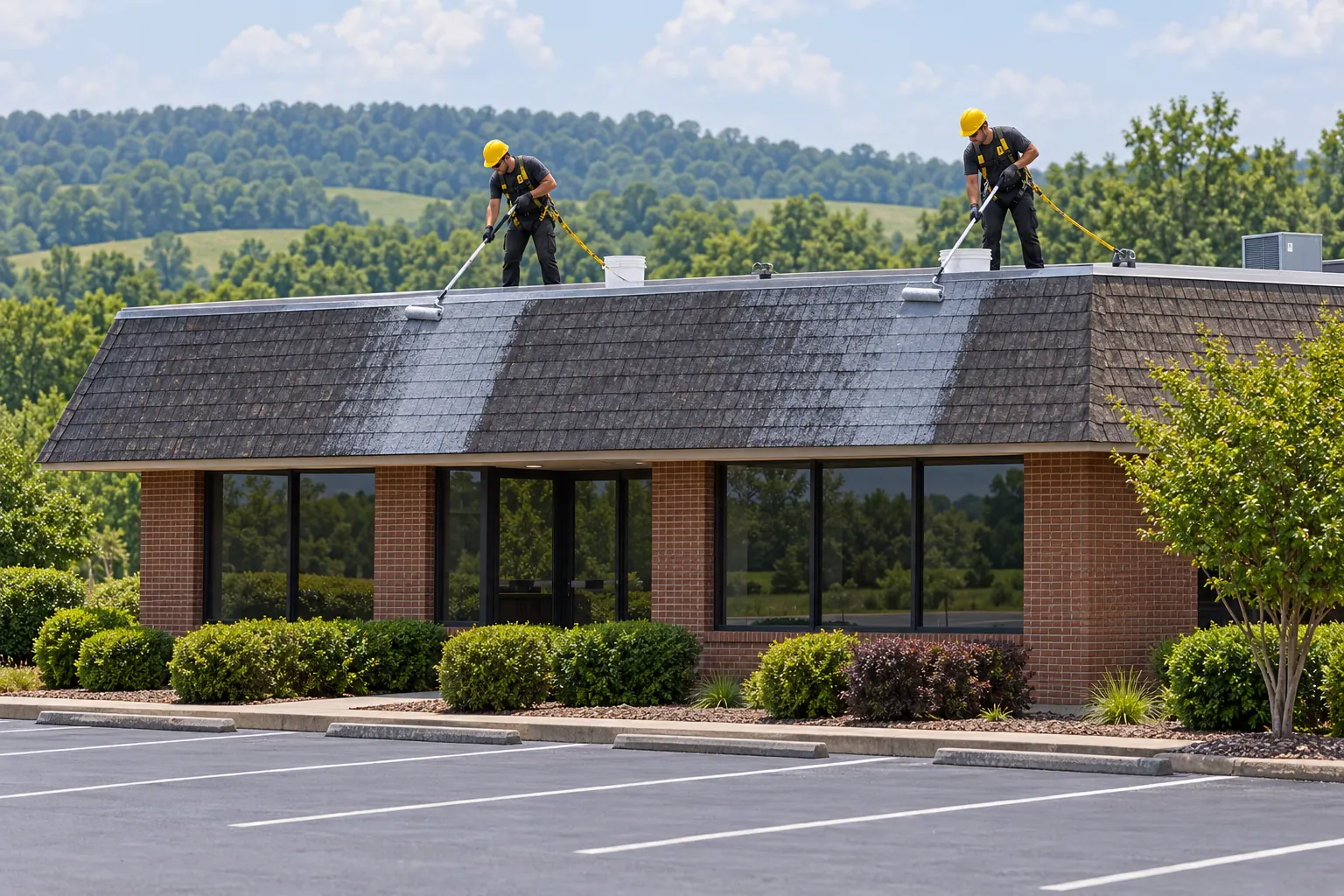
Shingle Roof Coating
Commercial asphalt shingle roofs that still lie flat, where the shingle maker allows coatings. Flashing, exposed nails, and loose tabs get fixed before the coating goes on.
Danville shingle roof coating
Which System Fits Which Roof
Three routes compared on the facts that decide most jobs on Danville buildings. The inspection confirms the pick on your roof.
| What We InstallCoating Over Metal | Spray Foam Over Metal | Shingle Coating | |
|---|---|---|---|
| Best Roof | Firm panels with leaking laps and screws | Uninsulated metal buildings | Asphalt shingles lying flat |
| Main Prep | Rust treatment, screws, lap fabric | Dry panels, edge and curb extensions | Tab sealing and flashing repairs |
| Insulation Added | Reflectivity only | A closed-cell foam layer | Reflectivity only |
| Roof Height | About the same | Raised at edges, curbs, and flashing | About the same |
| Weather Needs | Dry panels; acrylic needs warmth | Dry panels and calm air | Dry weather for the coating |
Silicone or acrylic is the topcoat choice inside the first two columns: silicone where water sits, acrylic where the roof sheds water fast and a bright, clean surface matters.
Unsure Which System Your Roof Needs?
That call gets made on the roof. Book a free inspection and we will walk the panels, laps, gutters, and drainage, then explain which system fits your building and why.
Have These Ready
- Roof size, if known
- Panel or shingle type
- Where leaks show inside
- Insulation under the roof
The Same Five Steps For Every System
Whatever goes on last, the work runs in this order. Skipping ahead, or rushing the drying time, is how coatings peel.
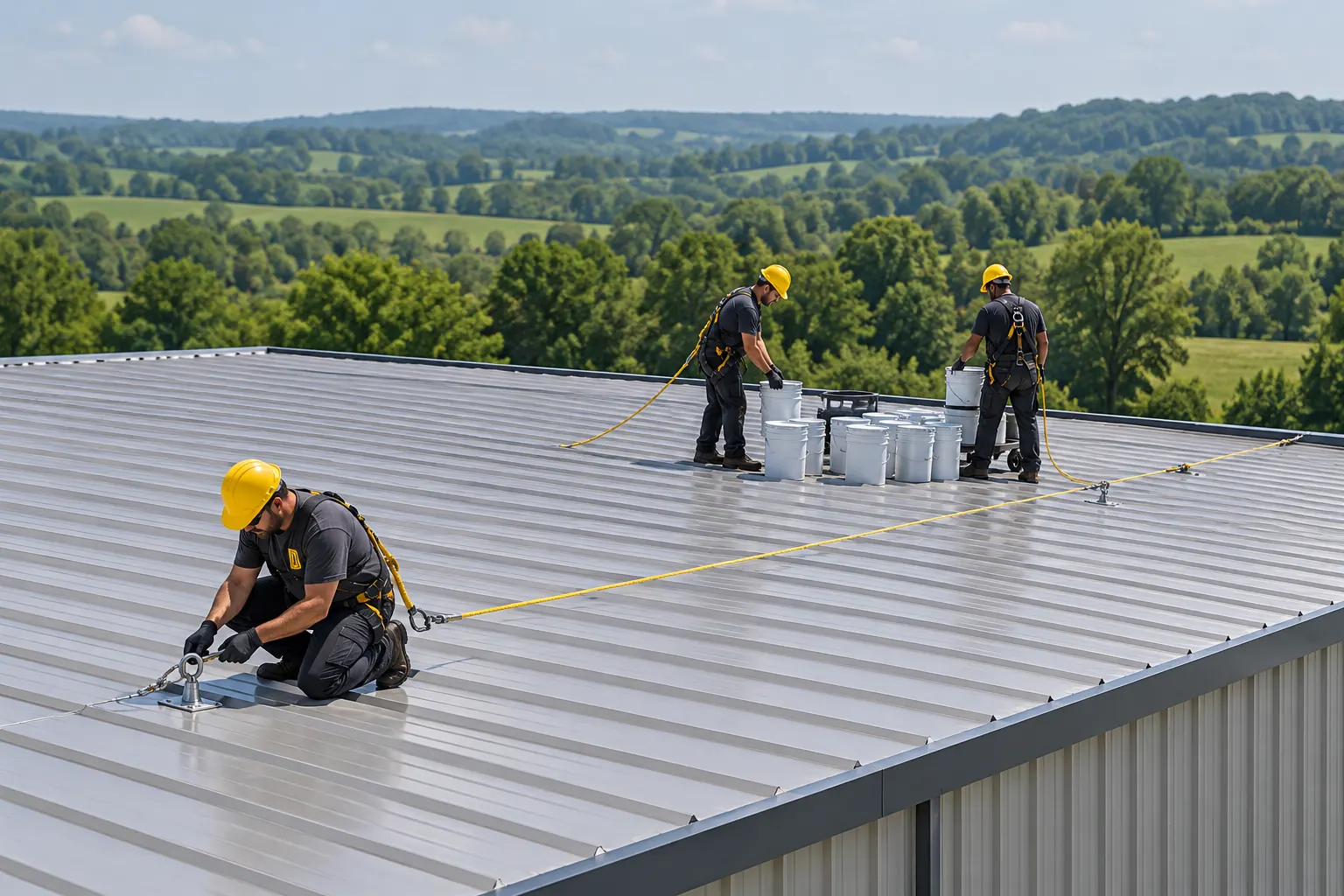
Inspect Your Roof
Every job opens with a walk of the whole roof. We photograph rust, laps, screws, drainage, curbs, and skylights, then explain which of the five systems fits the building.
Clean The Surface
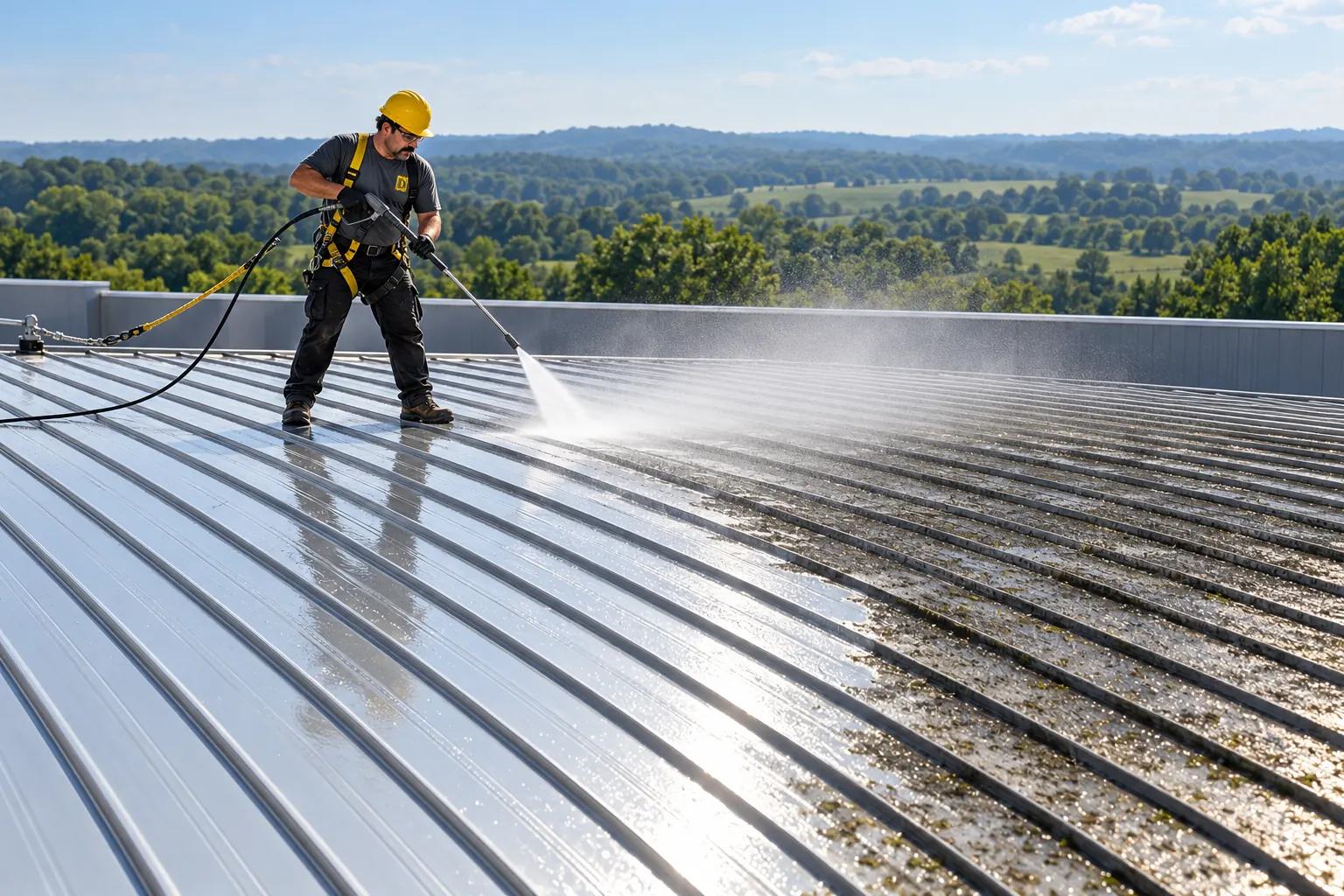
Pressure washing removes chalk, dirt, pollen, and loose rust, with detergent or degreaser where the surface needs it. Everything dries before the next step.
Repair And Prime
Screws, panels, closures, tabs, and flashing get fixed. Primer goes on where the metal or old coating calls for it, matched to that surface.
Detail The Joints
Laps, seams, curbs, and penetrations get fabric, mastic, or foam detail, since joints move more than the field as the panels heat and cool.
Apply The System
Topcoat, foam plus topcoat, or shingle coating goes on to the thickness its product sheet calls for, checked as the crew works.
Questions About Our Coating Services
When is a metal roof past the point of coating?
When the steel itself has given out: rust holes across many panels, metal that flakes away under a wire brush, or a deck that flexes underfoot.
Scattered rust-through and a few bad panels point to restoration, where those parts are replaced and then the roof is coated. Failing purlins, sagging structure, or soaked insulation point to a new roof system.
Silicone, acrylic or urethane: which coating fits a metal roof?
All three work on metal; drainage, foot traffic, and recoat plans decide. Silicone handles water in gutters and low spots and tolerates cooler, damper days, yet only silicone bonds to it later.
Acrylic stays cleaner and recoats easily but softens where water sits. Urethane gives the toughest surface for foot traffic. Many jobs combine them, such as a urethane or acrylic base at seams under a silicone topcoat.
Can the building stay open while the roof is coated?
Most buildings do, since the crew works on top of the panels and the roof stays closed. Rooftop air intakes get shut off or covered during priming and spraying, and parking near the eaves moves to avoid overspray.
Loading doors under the work area go on a schedule. Pressure washing is noisy and sheds water off the eaves, so it is timed around shift changes or busy store hours.
Is coating a metal roof worth it compared with replacing it?
It is when the panels and structure still have life and the problems sit at seams, laps, fasteners, and surface rust. Replacement tears off working steel, adds disposal, and opens the building to weather during the job.
That gap grows on large roofs. Replacement wins when panels are rusted through across wide areas or the purlins and insulation have failed.
What happens during an inspection of a commercial metal roof?
The crew walks every panel run, samples fasteners for failed washers, checks side and end laps for gaps, tests rust depth with a wire brush or scraper, and looks at skylight panels, curbs, gutters, and ridge caps.
Problem spots get photographed. You then get those photos and a clear answer: coating, restoration with repairs, spray foam, or replacement.
Can one building get more than one coating system?
Yes, and mixed roofs often need it. A metal warehouse with a flat dock canopy can take acrylic on the steep panels and silicone on the canopy where water sits.
A shingled office wing gets a shingle coating while the metal shop behind it gets the metal system, all planned as one job from one inspection.
Do coatings work on roofs with skylights and rooftop units?
They do, with each opening sealed first. Fiberglass skylight panels are replaced, covered, or sealed at their edges and left uncoated, and rooftop unit curbs get flashing repairs and walk pads on the service path.
Cracked pipe boots are replaced, and the field coating then ties into those finished details.
Do you coat roofs in winter?
Full coatings wait for warmer weather, since each product sheet sets minimum air and surface temperatures and metal panels gather dew as they cool.
Winter work around Danville covers leak repairs at screws, laps, and flashing, plus inspections and planning, so the coating can start once spring brings dry, mild days.
Start With A Free Ballpark Estimate
Tell us the roof size and condition, or call to talk through which of the five systems your building points to.