Bright White Coatings For Metal Shops
Danville Acrylic Roof Coating
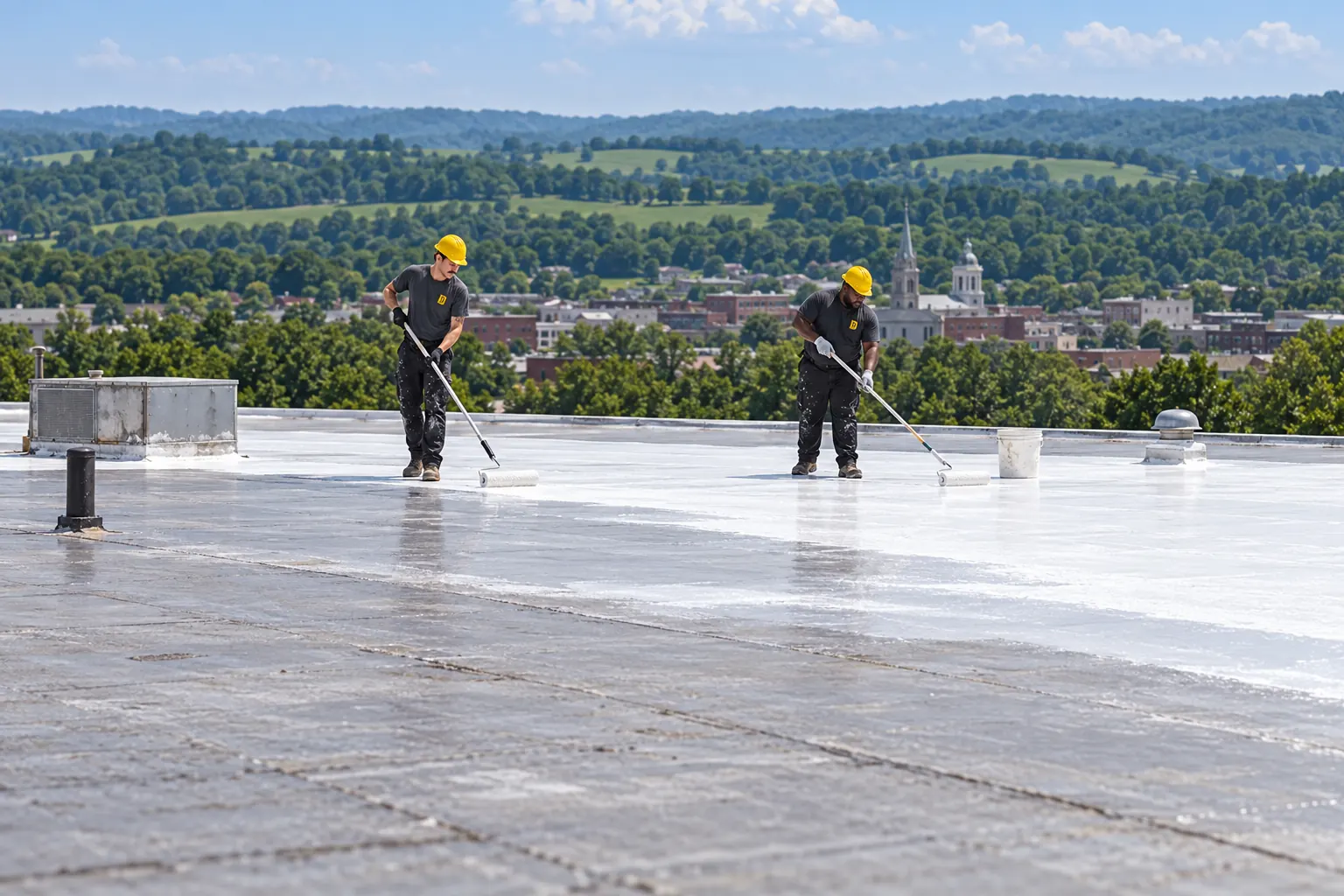
We apply acrylic roof coating in Danville on commercial metal roofs that shed water quickly, giving hot shops and sheds a bright white surface that recoats easily.
- Bright White Reflective Finish
- Late Spring To Early Fall
- Easy Acrylic Recoats
- CRRC Ratings Compared First
Is This Roof A Fit?
Acrylic rewards a roof that drains. The walk checks slope, wet spots, and the existing surface, since water sitting for days softens acrylic over time.
| What We InstallAcrylic Fits | Detail First | Pick Silicone Instead | |
|---|---|---|---|
| Slope | Steeper metal that sheds fast | Mostly steep, a few flat sections | Low pitch across the whole roof |
| Wet Areas | Dry within hours of rain | Gutters and valleys detailed in silicone | Water sitting for days on the field |
| Building Use | Hot, uninsulated shops and sheds | Insulated buildings with leaks | Plants with heavy exhaust residue |
| Weather Window | Warm, dry days ahead | Short dry spells between rains | Cool, damp weeks with frequent rain |
| Recoat Plan | Wash, prime, and add acrylic later | Mixed coatings from past patches | Existing silicone on the roof |
What We Check Before Acrylic Goes On
Acrylic cures by drying, so the roof and the forecast both have to cooperate. These five areas get a close look first.
Painted Panels
Old factory paint turns powdery in the sun. Washing until the rinse water runs clear gets the acrylic down onto the paint itself instead of a layer of loose chalk.
Gutters And Valleys
Gutters and valleys that stay damp for days soften acrylic over time. Those strips get a silicone or urethane detail while the rest of the field stays acrylic.
Panel Temperature
Each acrylic product sheet lists a minimum air and surface temperature. Metal panels cool fast after sunset, so the crew starts once morning dew burns off the ribs.
Light Surface Rust
Orange staining at screws and laps gets wire-brushed and spot-primed. Acrylic rolled over untreated rust lets brown stains bleed through the white finish.
Screws And Washers
Washers that have split in the sun get replaced along with their screws. Each head gets a dab of mastic, then the acrylic base coat seals over it.
Commercial Roof Coating Options for Danville
Acrylic fits Danville buildings where the roof sheds water well and summer heat inside is the complaint.
Equipment Sheds And Barns
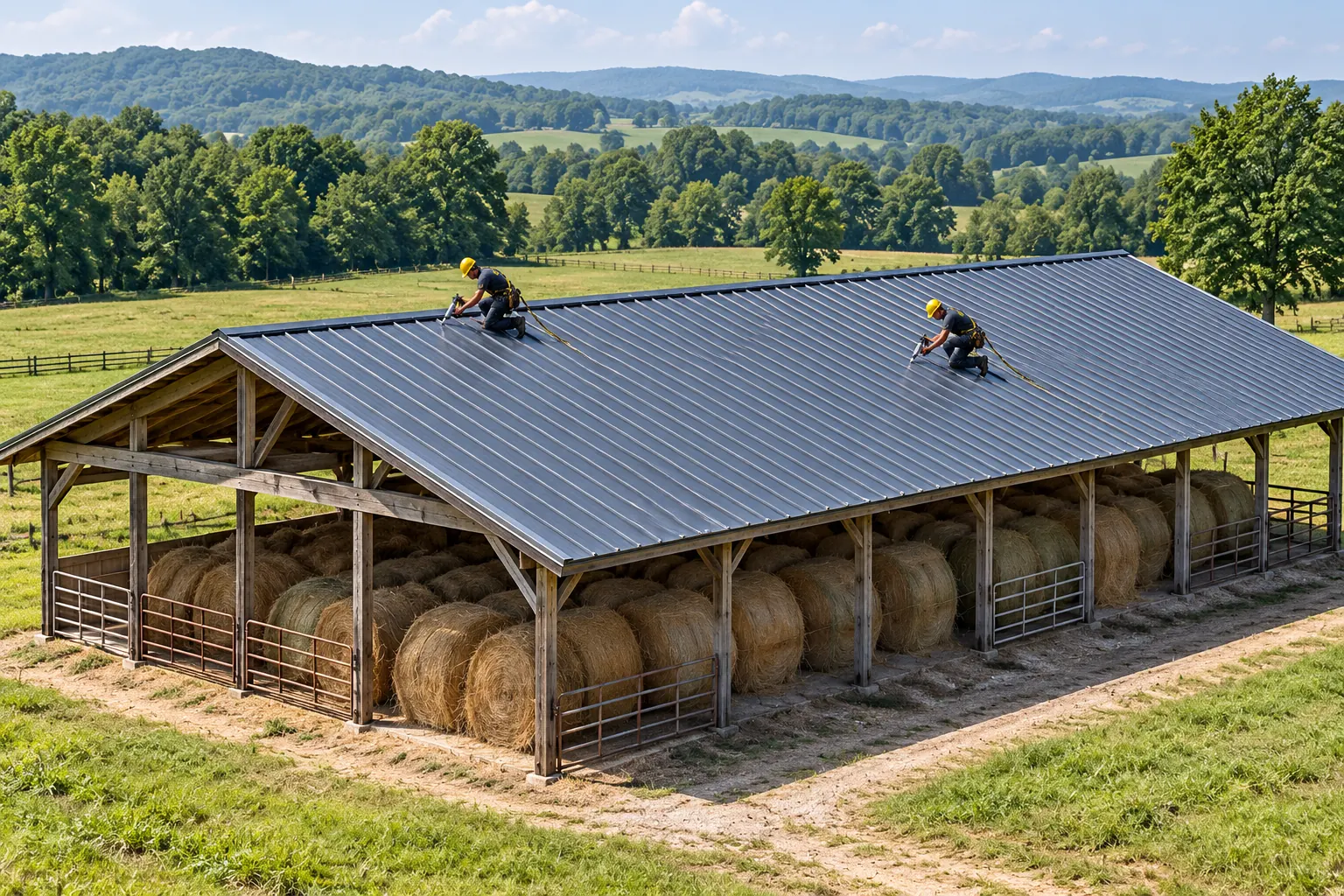
Open-sided sheds and hay barns with steeper corrugated roofs drain fast. A white acrylic finish over primed steel seals the screws and keeps sunlit panels cooler.
Uninsulated Metal Shops
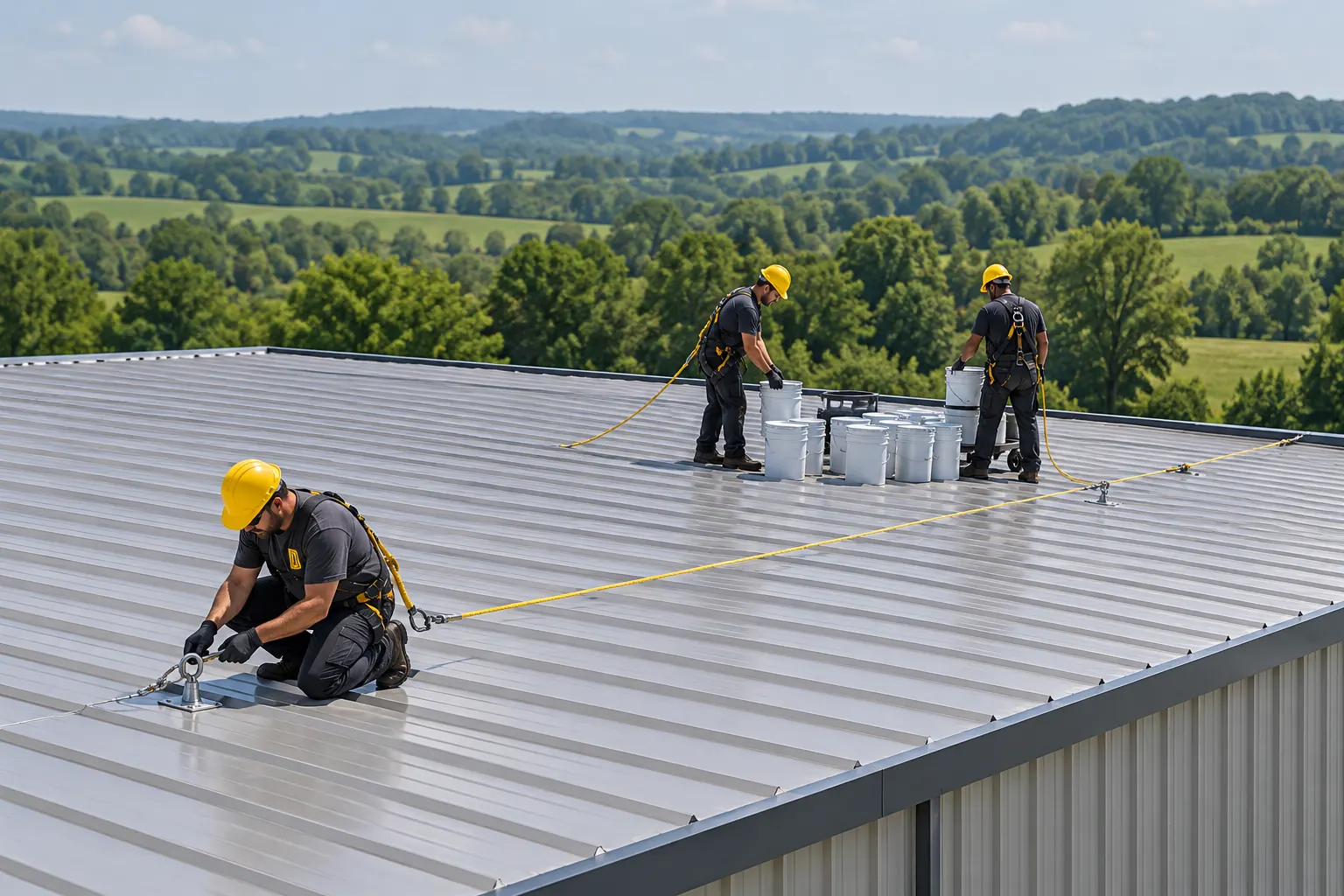
Shops with little insulation under the panels feel summer heat most. A reflective white topcoat lowers the temperature of the sunlit steel, so less heat reaches the work area below.
Older Retail And Office Roofs
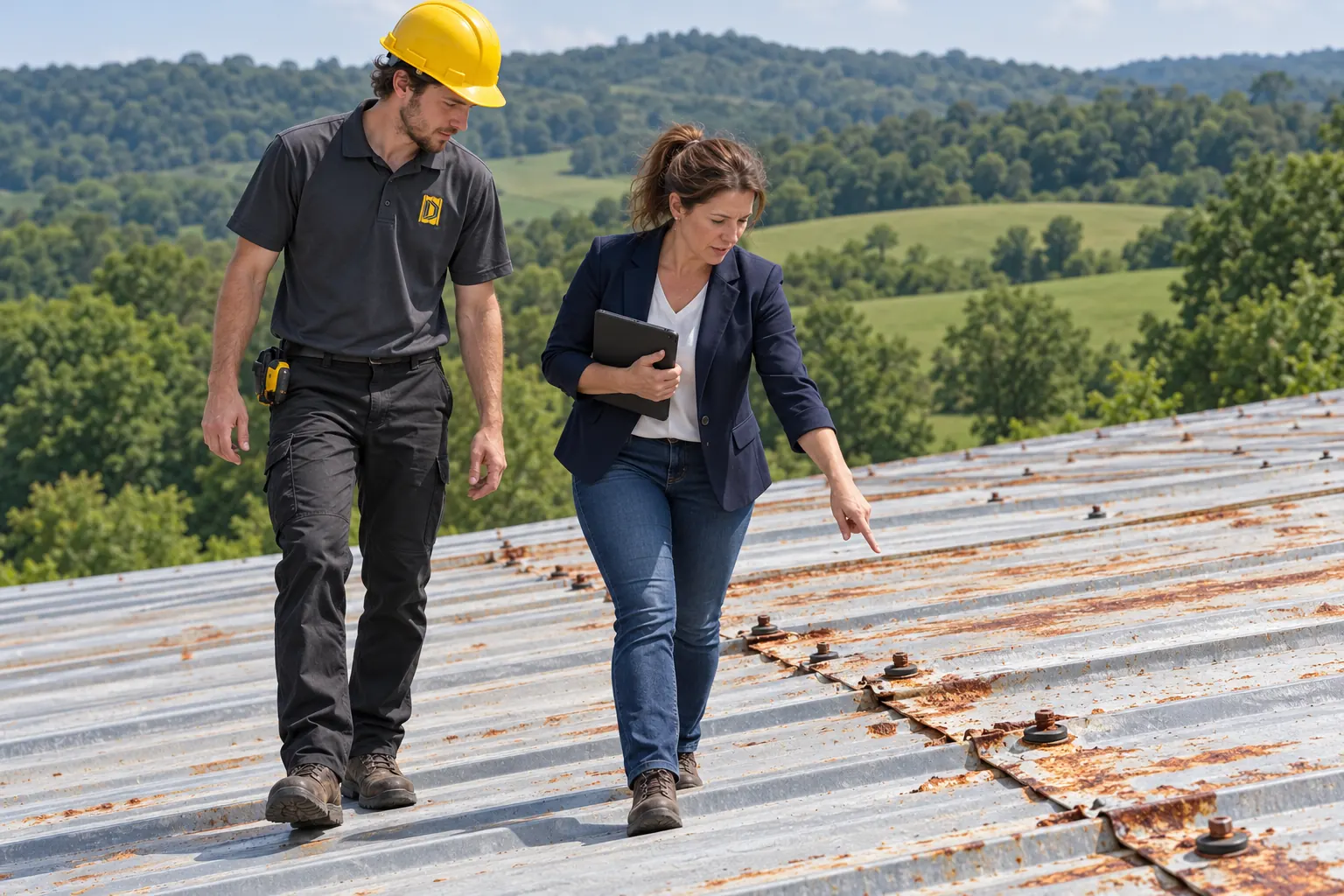
Steeper metal roofs over offices and storefronts often carry light rust and chalked paint. Acrylic covers both after washing and priming, leaving a white surface that is easy to recoat.
Benefits of Coating Your Roof
On a roof that drains well, acrylic brings these four gains, plus a white surface that stays cleaner between washings.
Spend Less Than A Re-Roof
Washing, priming, and coating cover the roof without paying to tear off and replace panels that still hold up.
A Cooler Sunlit Roof
A bright white acrylic surface reflects much of the sun that bare or dark panels absorb, which lowers the heat reaching the space below.
Panels Stay Out Of The Landfill
Coating keeps the original steel on the building, so the job hauls away empty pails and rags instead of roofing.
Simple Recoats
Years later, a wash and primer get the surface ready for another acrylic coat, or silicone if the roof has changed.
Summer Heat Building Up In The Shop?
Tell us the roof size, the panel type, and whether there is insulation under it. Those three facts shape the acrylic plan and its schedule.
Have These Ready
- Roof slope or photos from the ground
- Insulation under the panels, if any
- Past paint or coating on the roof
- Preferred work months
Or dial (859) 204-8078
Acrylic Application, Step By Step
Acrylic is forgiving to apply and strict about weather. The order below keeps both in check.
Inspect Your Roof
We check slope, wet spots, rust, screws, and the condition of any old paint. A rub test on the panels shows chalk, and wet areas get marked for a different detail.
Wash Off The Chalk
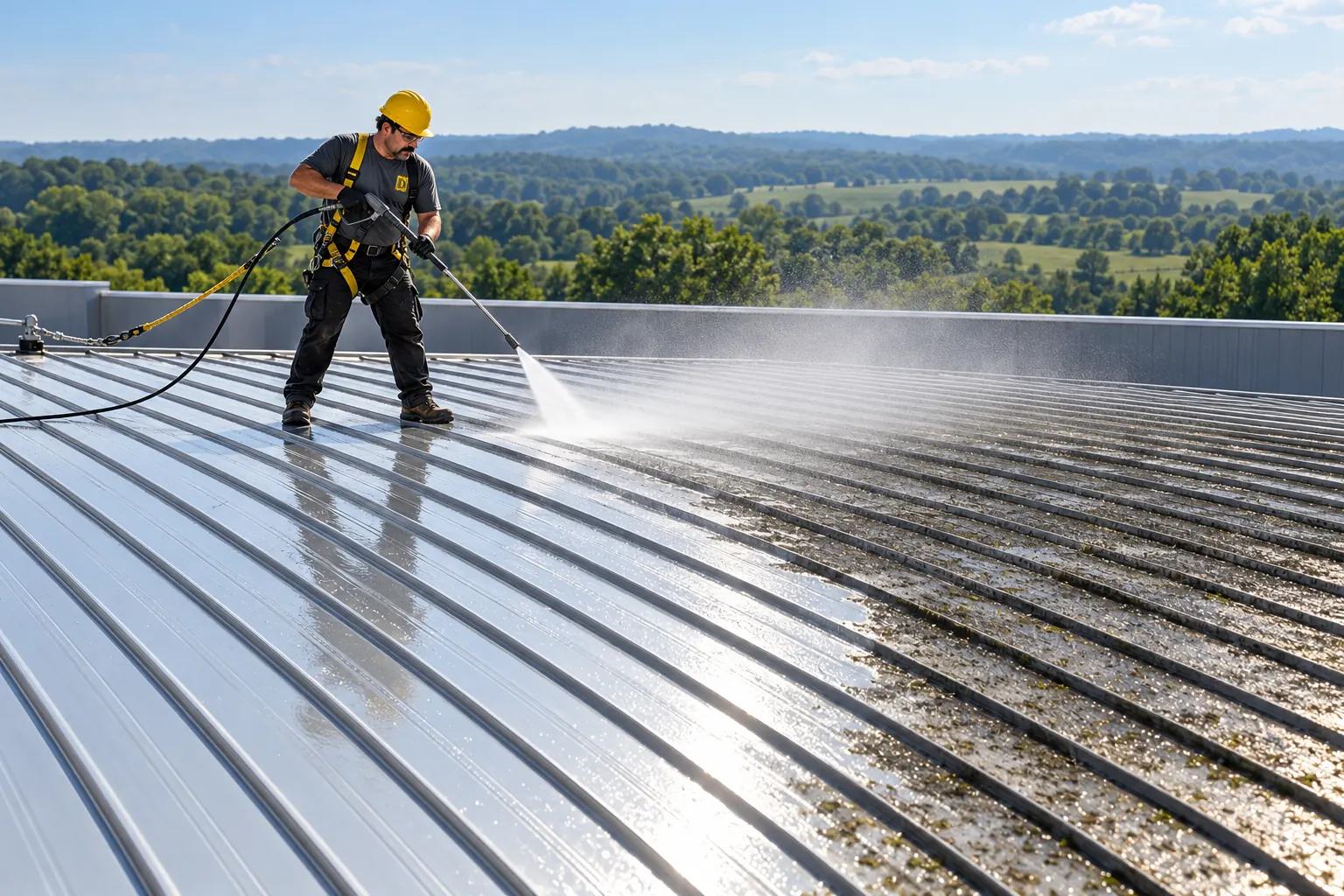
Detergent washing and a full rinse remove chalk, dirt, and pollen. The panels then dry completely, because acrylic over a damp surface loses its grip.
Prime Rust And Bare Metal
Spot primer goes on rusted screws, laps, and gutters. Galvanized panels get a primer made for zinc, tested with a small patch first.
Seal Laps And Fasteners
Fabric in base coat goes over end laps and seams, and every screw head gets mastic. Wet strips such as valleys get silicone or urethane instead.
Roll The White Topcoat
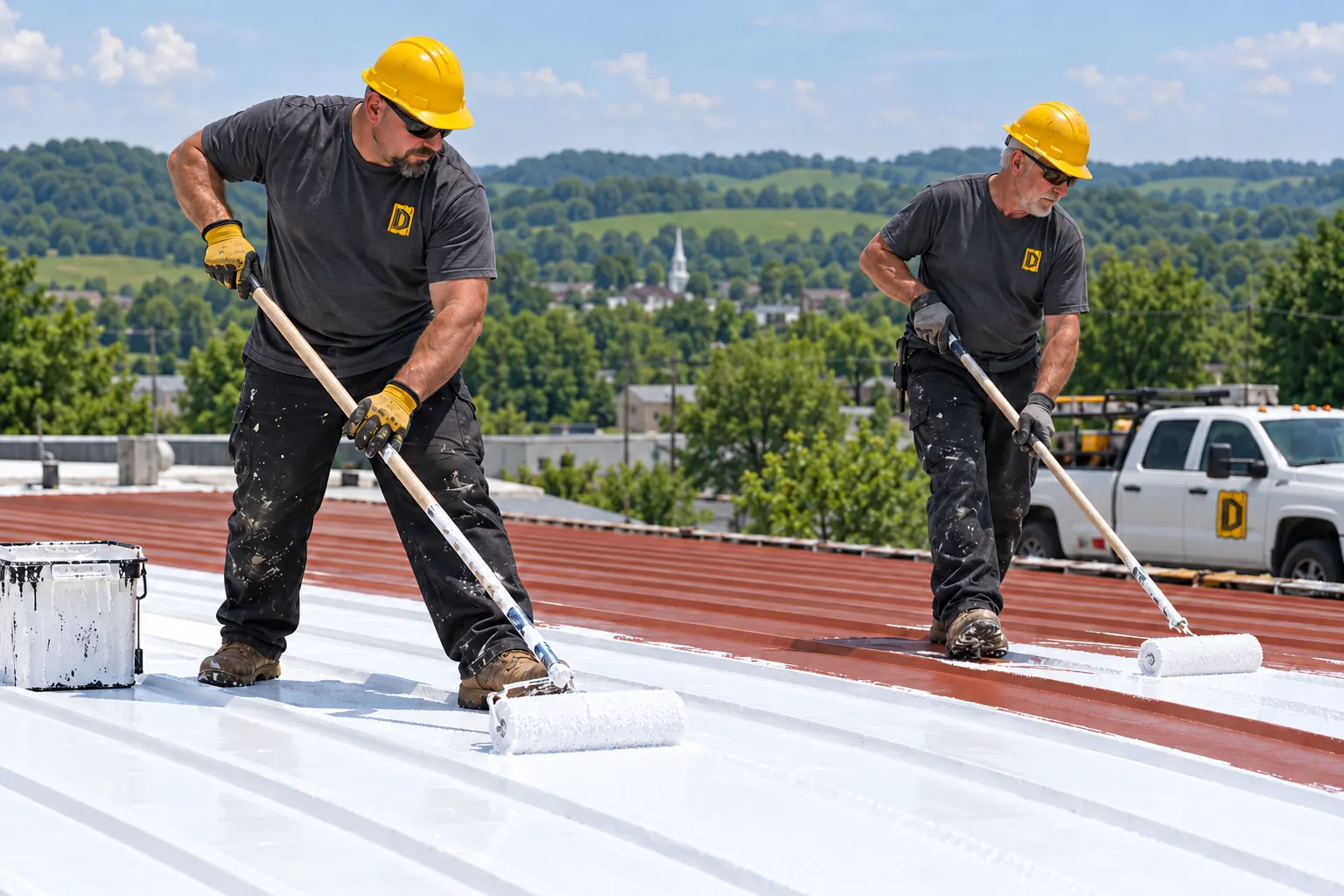
Two coats of acrylic usually go on, timed so each dries before dew or rain. The crew stops early enough in the afternoon for the surface to skin over.
Services That Pair With Acrylic
Acrylic rarely works alone on a metal building. These services handle the parts it leaves to others.
Silicone Roof Coating
Valleys, gutters, and flat sections that stay wet get silicone details while the field stays acrylic.
Danville silicone roof coatingMetal Roof Coating
Screw replacement, rust grinding, and lap sealing are the metal coating prep under every acrylic job.
Danville commercial metal roof coatingShingle Roof Coating
A shingled office wing on the same building can be coated during the same visit if it passes inspection.
Danville shingle roof coating
Acrylic Roof Coating Questions In Danville
Will a white coating make a metal building cooler inside?
A white, reflective coating lowers the temperature of a sunlit metal roof, which cuts the heat passing into the building. The U.S. Department of Energy guide to cool roofs ties that to solar reflectance and thermal emittance.
Shops and sheds with little insulation notice it most. The Cool Roof Rating Council directory lists rated products, and periodic washing keeps reflectance up.
When is acrylic roof coating the better choice for a metal building?
On steeper metal roofs that shed water quickly, especially where a bright, clean white surface matters. Acrylic rolls on easily, stays cleaner than silicone, and takes another acrylic coat later after washing and priming.
In central Kentucky it goes on from late spring through early fall, with a forecast clear of rain and dew for the first hours of cure.
How long does a fresh coating need before rain?
Each coating's product sheet lists its rain-safe window, and application is timed so that window clears before forecast rain. Water-based acrylic needs the longest dry spell; silicone and some urethanes resist light rain sooner.
Full cure takes longer still, so walkways and paths to rooftop units stay closed until the film firms up. On metal, evening dew counts as rain.
Does acrylic coating work over rusty metal?
Over treated rust, yes. Flaking rust gets brushed or ground back to firm steel and primed with a rust-inhibiting primer, and only then does acrylic go on.
Coating straight over loose scale traps moisture and lets rust spread under the film, with brown staining showing through the white. Panels rusted through get replaced before any coating.
How often does an acrylic roof need washing?
Once a year is a good starting point, and roofs near dusty lots, trees, or exhaust vents need it more. Acrylic stays cleaner than silicone, yet dirt still dulls the surface and lowers reflectance.
Washing also gives you a close look at laps, screw heads, and gutters, where small touch-ups keep the coating sealed.
Find Out What Acrylic Would Run On Your Building
Request a free ballpark estimate, or call to talk through slope, rust, and the months that fit your schedule.