Commercial Metal Roofs In Boyle County

Danville Metal Roof Coating

We coat commercial metal roofs across Danville. Every metal roof coating job starts at the screws, laps, and seams, then finishes with a full topcoat over the panels.

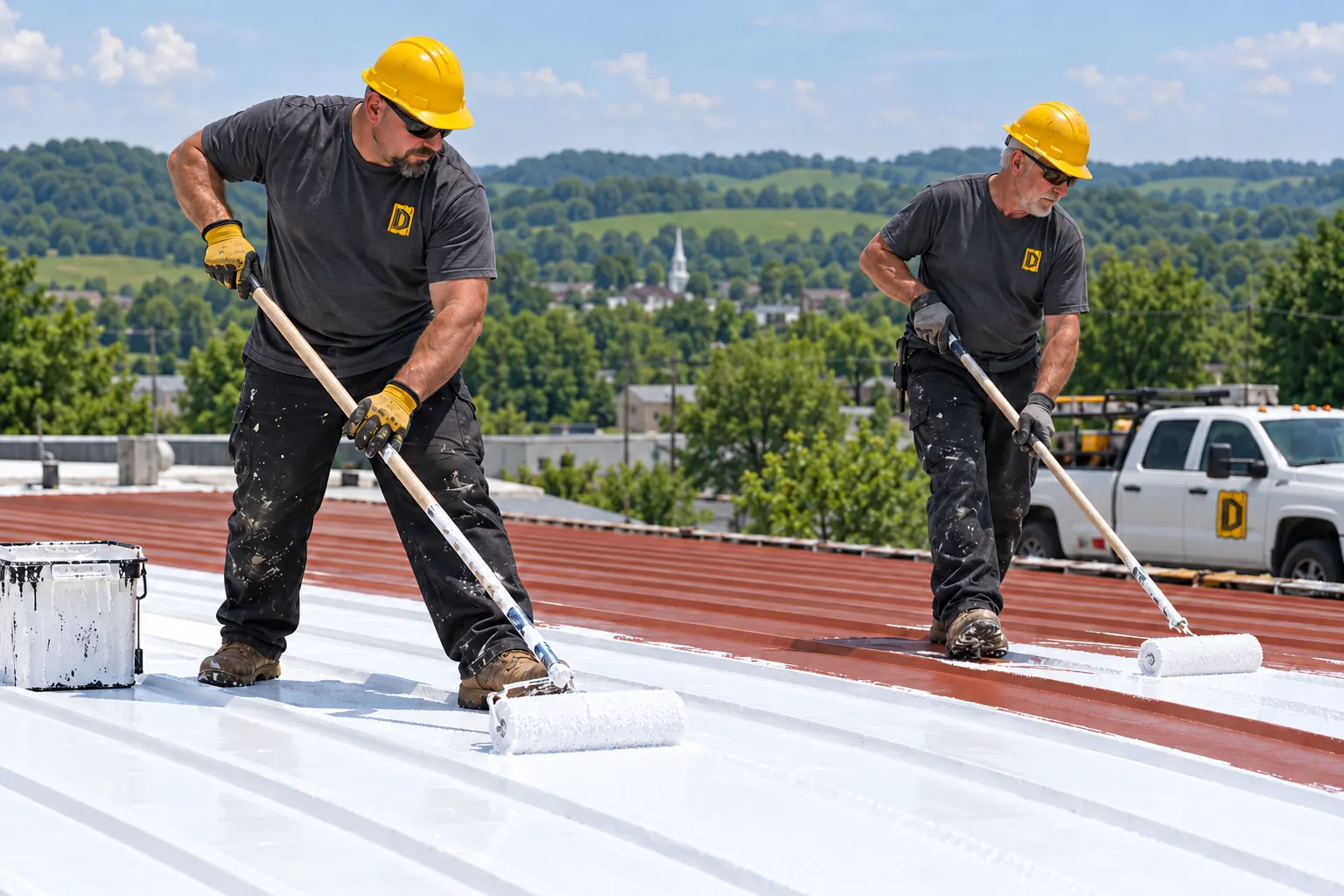
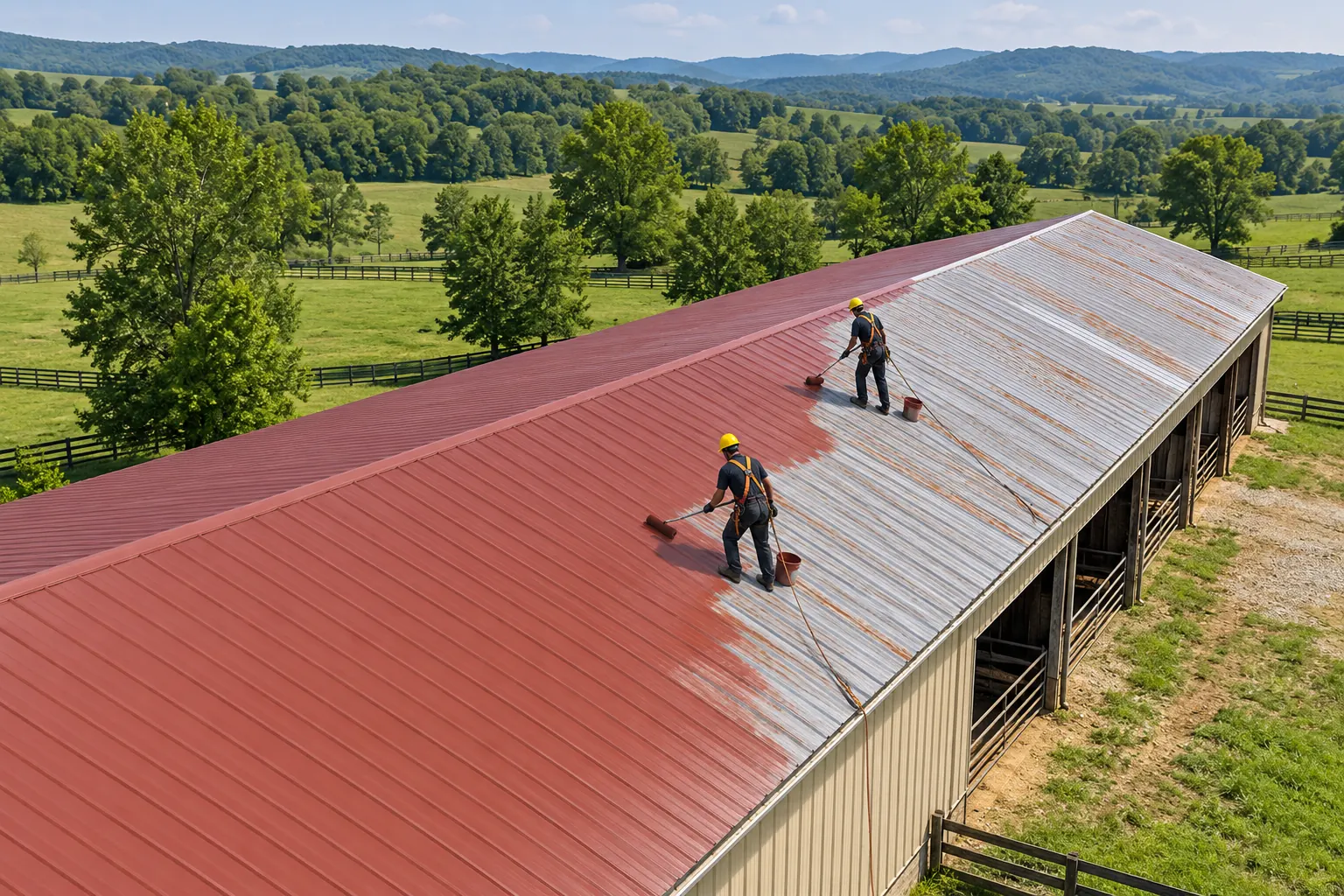
Roofer in a logo work shirt rolling white coating over a red metal roof in Danville, KY
  • Every Screw And Washer Checked
  • Laps Sealed Before Topcoat
  • Rust Primed To Firm Steel
  • Plants Stay Open, Zone By Zone

Where Metal Roofs Leak First

Water seldom comes through the middle of a steel panel. It gets in at five places on a metal building, and each one gets its own repair before any coating goes on.

  1. Eaves And Gutters

    Leaves and grit hold water against the steel inside a gutter, so it rusts from the inside out. Meltwater refreezes at the eave in winter and pries at old sealant along the bottom panel row.

  2. Panel Laps And End Laps

    End laps on long warehouse runs let wind-driven rain push uphill under the overlap. Side laps open a little more each season as the panels heat and cool every day.

  3. Fastener Rows

    Rubber washers split and harden after years of sun, and panel movement works screws loose. A backed-out screw leaves a ring of open space at the washer that leads water into the building.

  4. Ridge Caps And Trim

    Wind lifts ridge caps, eave trim, and rake trim, and foam closures shrink or fall out. Missing ridge screws let rain blow in sideways along the top of the roof.

  5. Penetrations And Skylights

    Pipe boots crack, curb flashing pulls away, and fiberglass skylight panels yellow and split. Each opening through the panels gets its own seal before the field coating ties into it.

Coat It, Restore It, Or Replace It?

The steel decides. We walk the panels, test rust depth with a scraper, and check how well the screws grip, then match the roof to one of three paths.

Coat It, Restore It, Or Replace It?
What We InstallCoat The RoofRestore, Then CoatReplace The Roof
PanelsFirmly attached, rust on the surfaceA few rusted-through or bent panelsWide areas perforated or bent
FastenersLoose screws and split washersMissing screws at laps and ridgeScrews spinning in thinned steel
Laps And SeamsLeaking laps on tight panelsOpened seams and failed trimSeams pulled apart across the field
StructureStraight purlins, firm underfootFirm, with local repairs firstSagging purlins or a flexing deck
InsulationDry under the panelsA few wet spots cut out and replacedSoaked across large areas

Restoration swaps out the bad panels, trim, and closures first. After that, the whole roof gets the same coating system as a roof in the first column.

How A Metal Roof Gets Coated

Five steps, in the same order on every building, because a step skipped at the start shows up later as peeling at the laps.

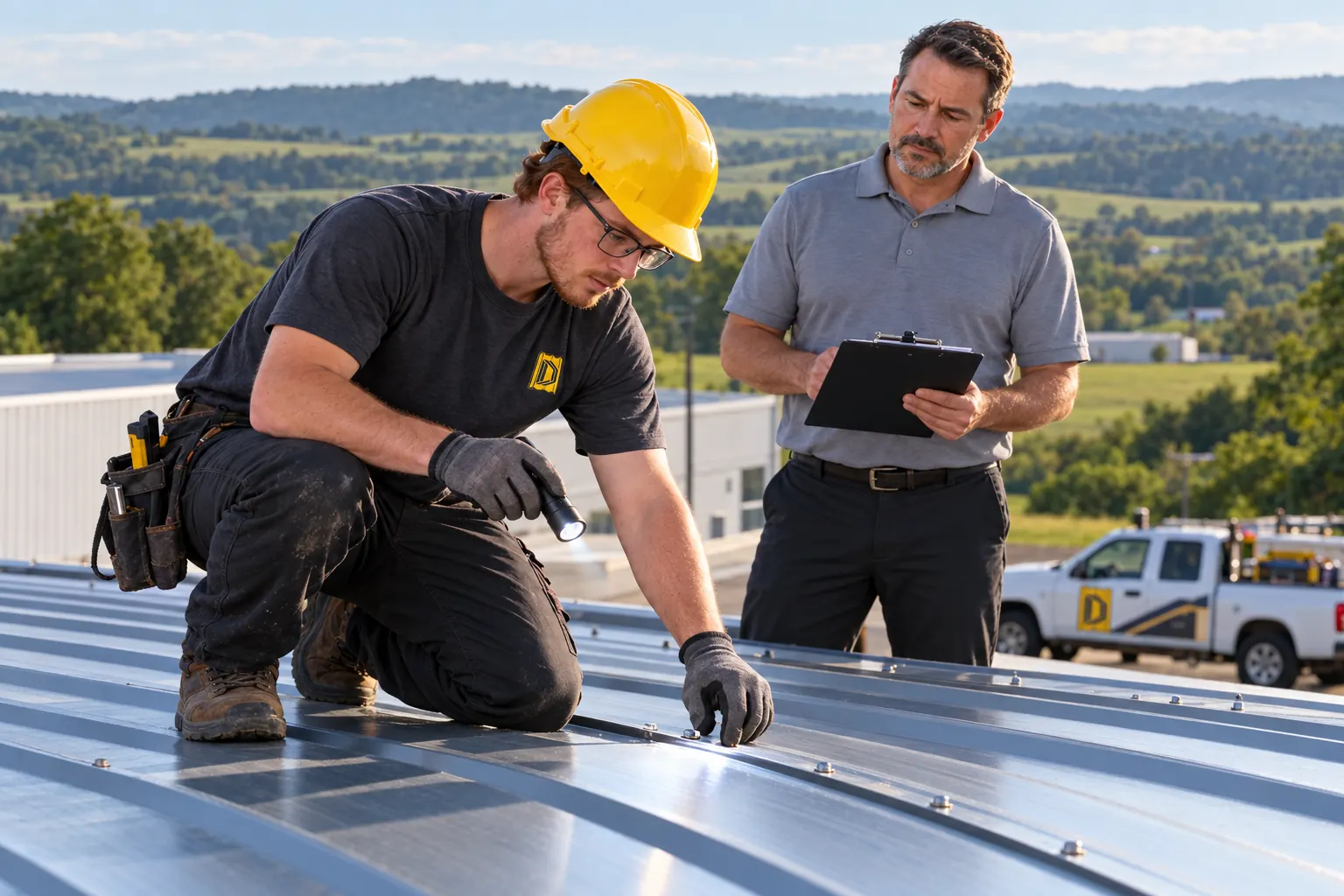
Roofer kneeling on a metal roof to check a panel while a facility manager takes notes
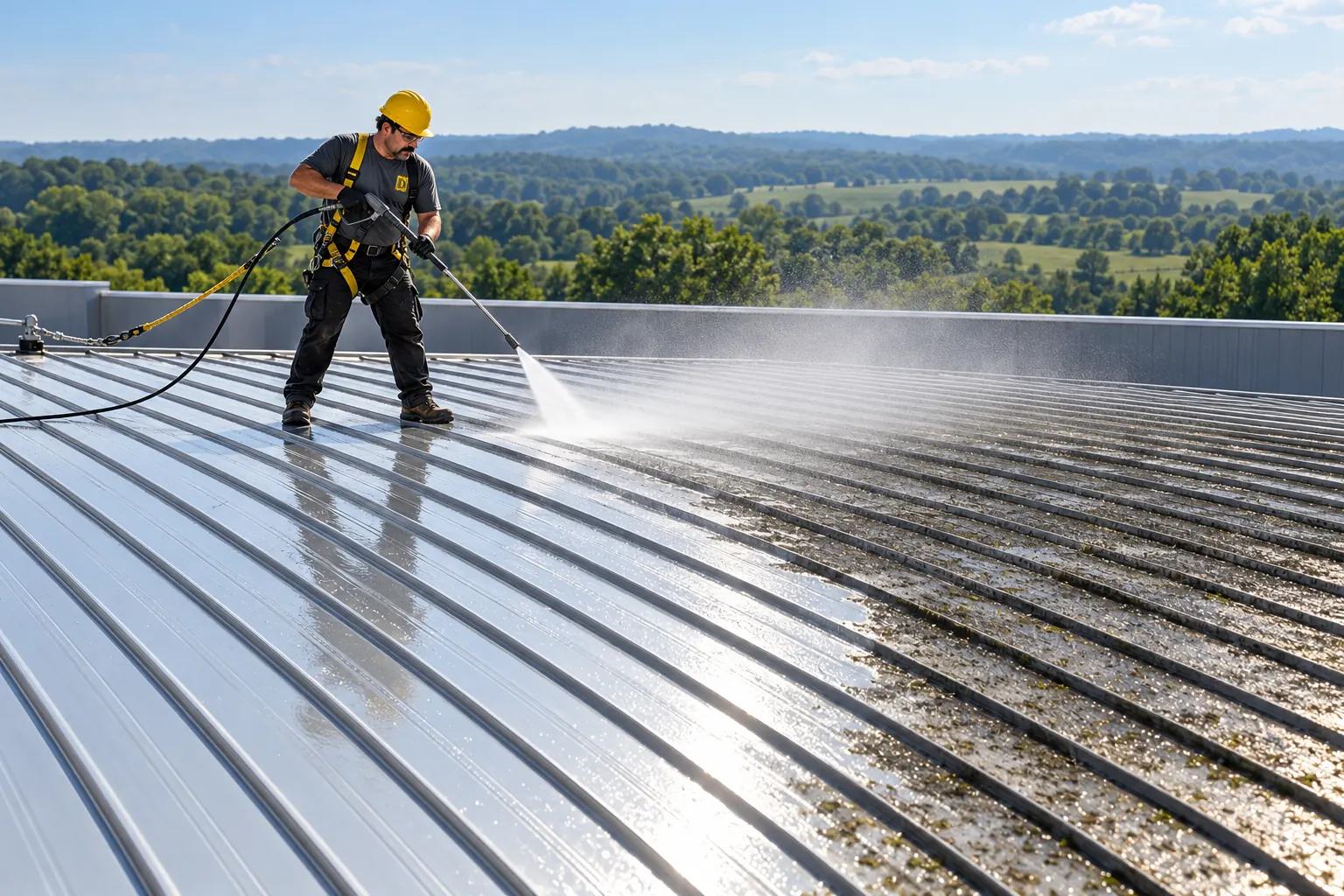
Crew member pressure washing a metal roof before primer goes on
  1. Inspect Your Roof

    We walk every panel run, count failed washers, scrape rust to see how deep it goes, and photograph the laps, gutters, curbs, and skylights. You get those photos with a clear call on coat, restore, or replace.

  2. Wash And Repair

    Pressure washing strips chalk, dirt, and loose rust. Stripped screws come out for larger ones, bad panels and closures get replaced, and the steel dries fully before primer.

  3. Prime The Steel

    Bare and rusted spots get a rust-inhibiting primer. Galvanized and Galvalume panels get a primer made for that metal, checked first with a small adhesion patch.

  4. Seal The Details

    Each fastener head gets mastic or a sealant cap. End laps, side laps, seams, curbs, and flashing get fabric set in base coat, since these joints move the most.

  5. Topcoat The Field

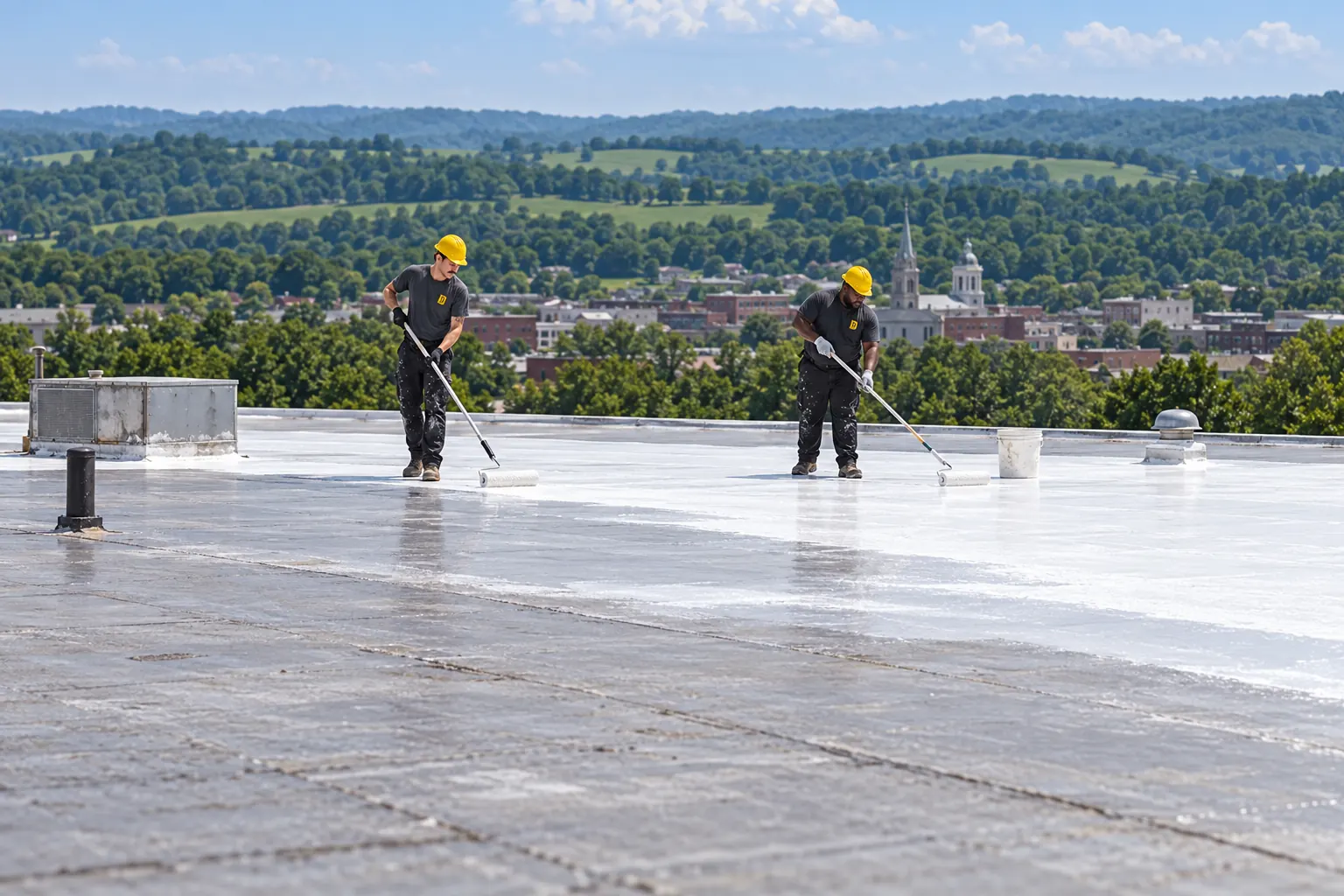
    Rollers or sprayers apply the topcoat to the thickness on the product sheet. A wet film gauge checks it as the crew moves, because thin spots wear through first.

Water Dripping Inside The Building?

Call with the drip spots marked on the floor or ceiling. Leak locations inside point straight to the laps, screws, or skylight panels above them.

Have These Ready

  • Photos of where water lands inside
  • Roof hatch, ladder, or lift access
  • Building age and past roof work
  • Rooftop unit locations

Five Ways We Coat Commercial Roofs

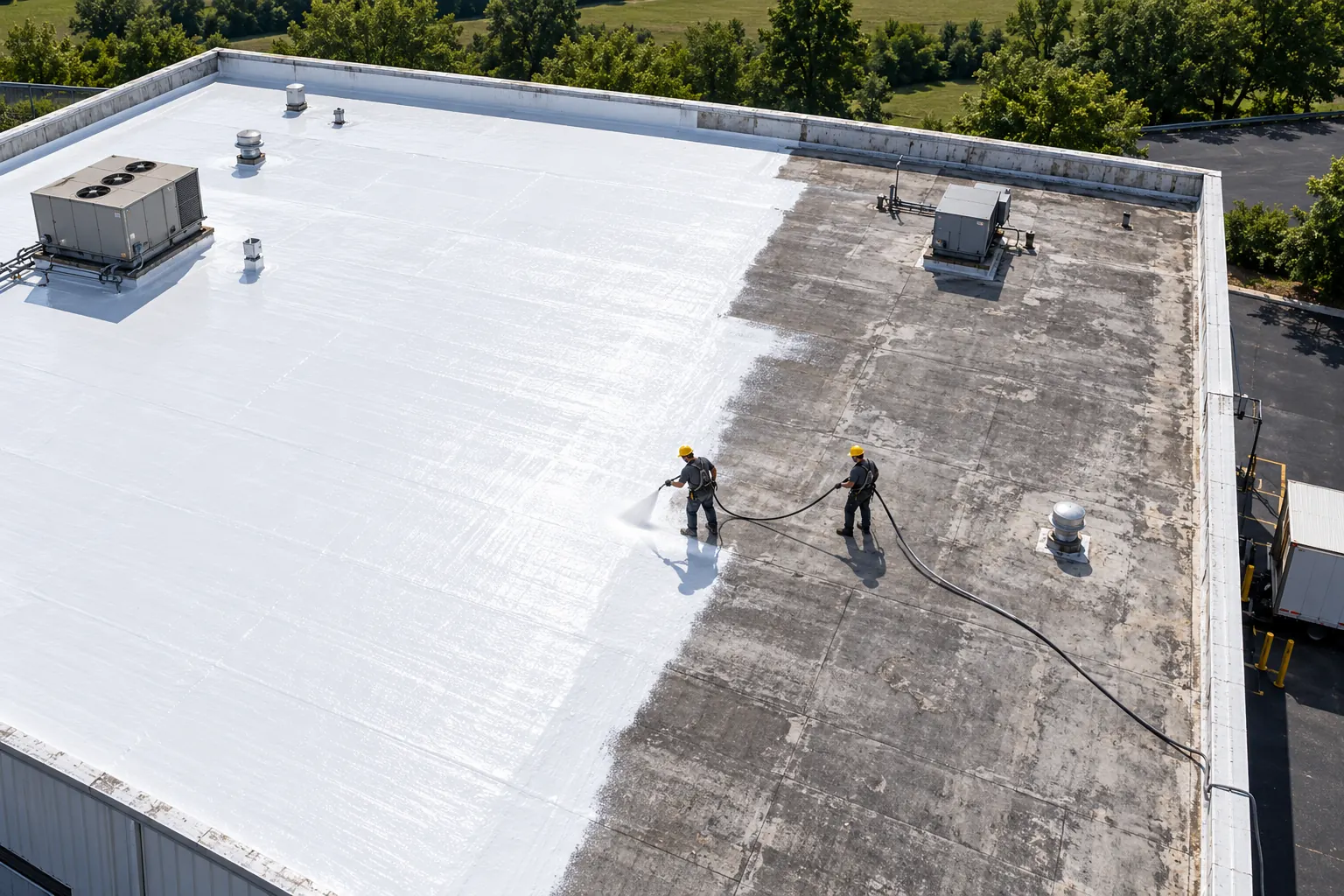
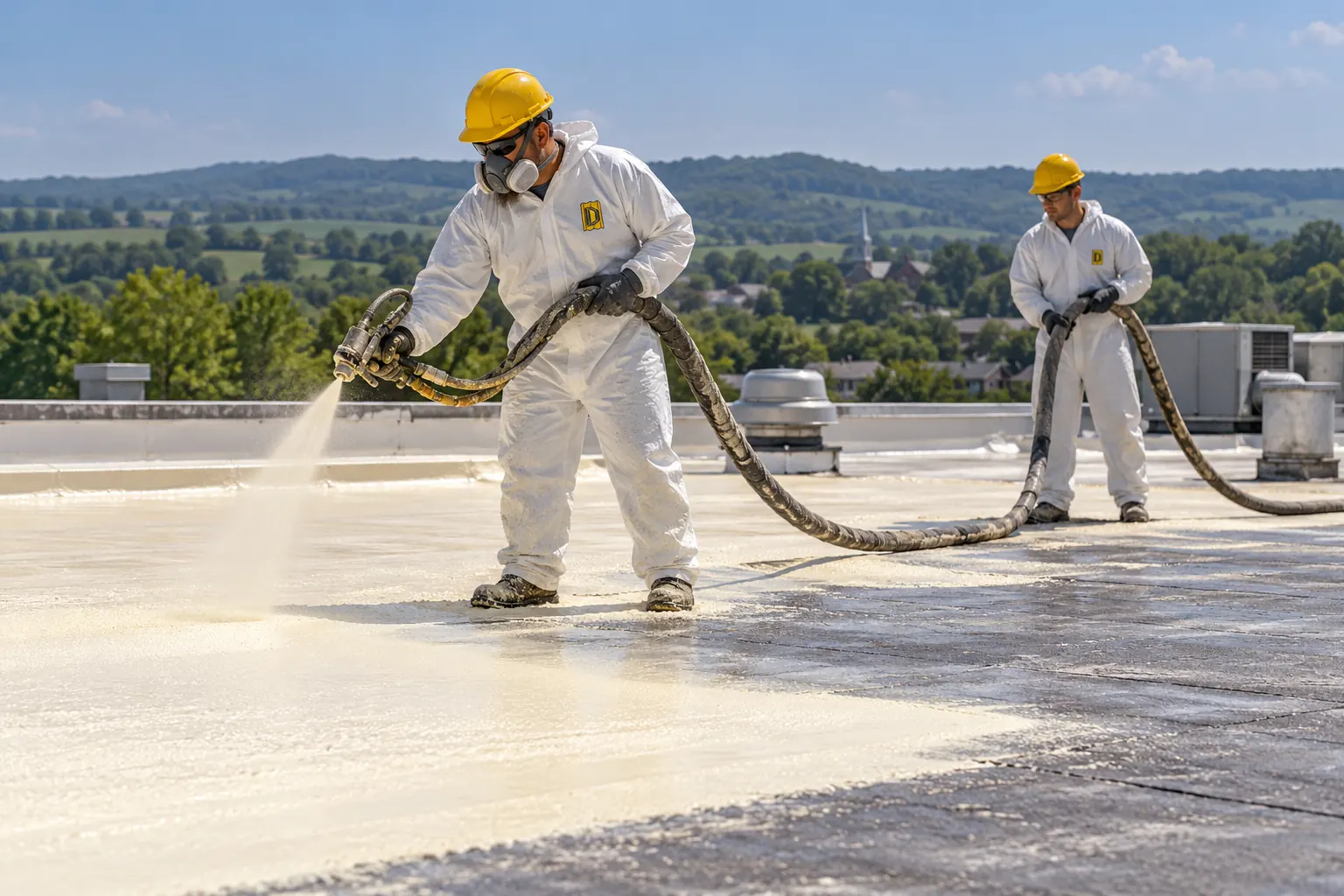
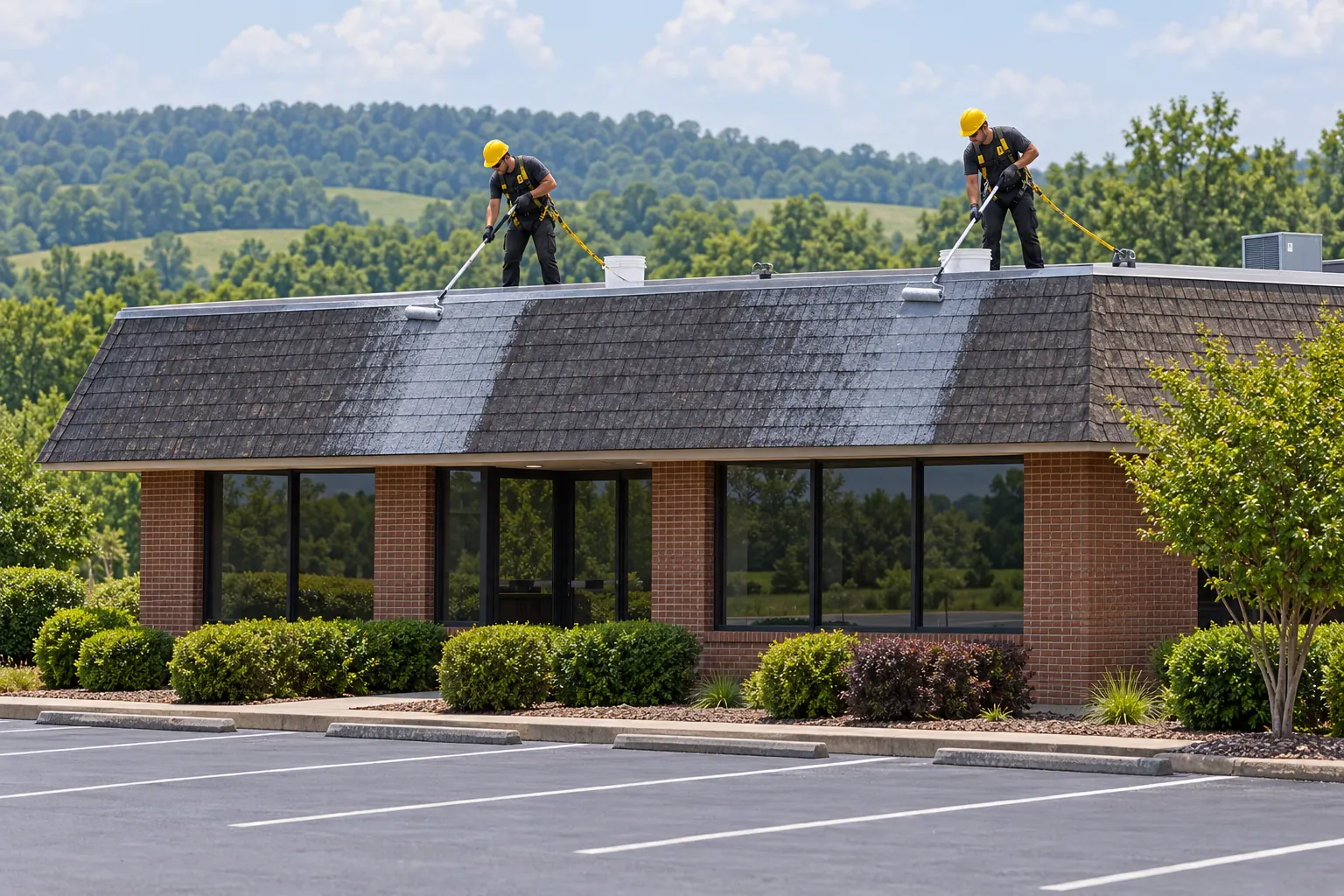
Metal panel roofs are the main work. We also coat low-slope roofs with silicone or acrylic, spray foam on uninsulated buildings, and coat shingle roofs that pass inspection.

Benefits of Coating Your Roof

These four gains depend on a roof that passes inspection first. On a metal building with solid panels, they are the reasons owners choose a coating.

  • Lower Cost Than Tear-Off

    Coating keeps the steel and purlins in place, so the budget covers screws, primer, and coating rather than new panels, tear-off labor, and haul-away.

  • Doors Stay Open

    Production, storage, and sales continue below while the crew works on top of the panels, one zone at a time on large roofs.

  • Less Steel In The Landfill

    Panels that still have their thickness stay on the building, which keeps truckloads of old roofing out of the dumpster.

  • Recoat Down The Road

    A coated roof that is washed and kept up can take a fresh topcoat later, so the panels below keep working.

Danville And Nearby Towns

We coat commercial roofs in Danville, Harrodsburg, Stanford, and Junction City.

Outside these towns? Call us or send us a message.

Service area around Danville, Kentucky: Harrodsburg to the north and Junction City to the south on US 127, Stanford to the southeast on US 150 (schematic, not to scale).US 127US 127US 150US 150HarrodsburgMercer CountyJunction CityBoyle CountyStanfordLincoln CountyDanvilleBoyle CountyNNot to scaleService area around Danville, Kentucky: Harrodsburg to the north and Junction City to the south on US 127, Stanford to the southeast on US 150 (schematic, not to scale).US 127US 127US 150HarrodsburgMercer CountyJunction CityBoyle CountyStanfordLincoln CountyDanvilleBoyle CountyNNot to scale

Questions Danville Building Owners Ask

  1. What does a metal roof coating do on a commercial building?

    It puts one flexible membrane over the openings where metal roofs leak: seams, panel laps, and fastener heads. The liquid cures into a rubbery film that stretches as the panels heat and cool.

    On a Danville warehouse or shop, that means treating rust, sealing each screw, reinforcing laps with fabric or mastic, and topcoating the field. The steel structure stays, with a new weathering surface on top.

  2. How does central Kentucky weather affect a metal roof coating?

    Three ways in one year. Rain finds every open end lap and loose screw; the NOAA state climate summary puts Kentucky near 47.7 inches a year.

    Winter ice builds at eaves and in gutters, where meltwater refreezes against sealant. Summer sun makes panels grow by day and shrink at night, so the plan puts extra material at laps and fasteners.

  3. What drives the cost of coating a commercial metal roof?

    Size and slope set the base. The details move the number: how much red rust needs grinding and primer, how many screws get replaced or capped, and how many curbs, vents, and skylight panels sit on the roof.

    Gutter and trim repairs, coating type and thickness, and lift access count too. Long, simple warehouse runs cost less per square foot than small shops crowded with trim.

  4. Can large plant and warehouse roofs in Danville be coated without shutting down?

    Yes. Big roofs are split into zones at expansion joints, roof hatches, or panel runs, and each zone is finished through topcoat before the next one opens, so production keeps running below.

    Plant roofs add details smaller buildings lack: exhaust stacks that leave residue, condensate lines draining onto the panels, long end-lap lines, and site safety rules for anyone entering.

  5. Can a coated metal roof be recoated later?

    Usually, once it is washed and checked. Acrylic and urethane surfaces accept a fresh coat after cleaning and priming. Cured silicone bonds only to more silicone, so the first product choice sets the recoat path.

    Before a recoat, worn spots at laps and fasteners get touched up, and a small adhesion patch confirms the new coat grips the old one.

Get A Price Range For Your Metal Roof

Tell us the roof size and condition for a free ballpark estimate, or call to talk through the laps, screws, and rust you are seeing.

Call Us (859) 204-8078