R-Panel And Standing Seam Roofs
Danville Commercial Metal Roof Coating
We coat commercial metal roofs in Danville, from exposed-fastener R-panel to standing seam. Rust gets primed, screws get reset, and laps get sealed before the topcoat.
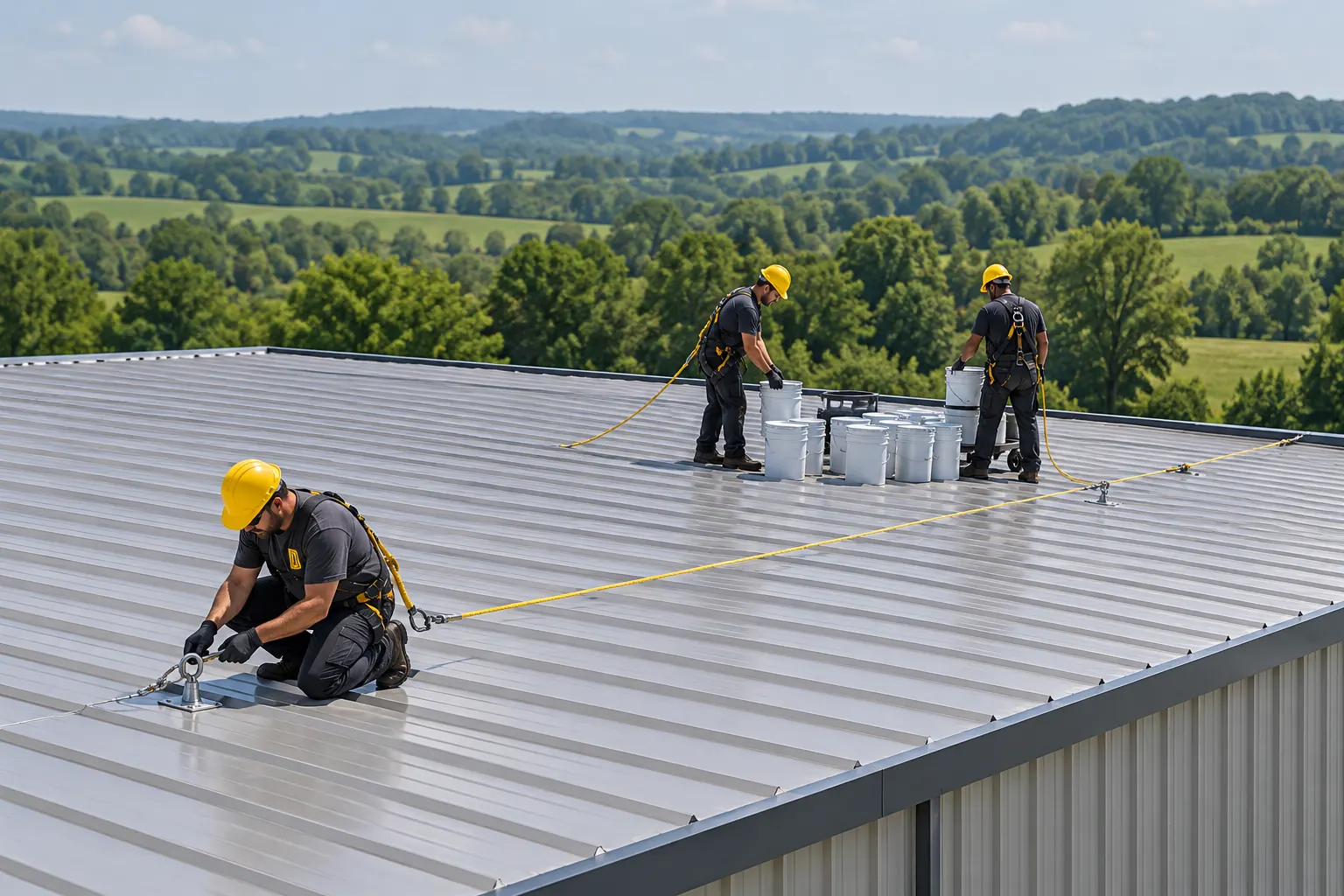
- R-Panel And Standing Seam
- Red And White Rust Treated
- Stripped Screws Upsized
- Zoning Checked Before New Equipment
Is This Roof A Fit?
Most metal roofs in Danville land in the first column once the screws and rust are handled. These are the signs we read on the roof walk.
| What We InstallReady For Coating | Repair First | Look At Replacement | |
|---|---|---|---|
| Rust | Orange staining or light flaking | Red rust lifting in flakes at laps and eaves | Holes through the steel on many panels |
| Screws | Washers cracked, screws still biting | Stripped screws needing a larger size | Screws with nothing left to grip |
| Panel Profile | R-panel, standing seam, or corrugated | A few dented or bent panels | Ribs crushed or panels torn loose |
| Seams And Laps | Leaking laps on tight panels | Standing seams opened at the ends | Long runs pulled apart |
| Gutters | Rust inside, metal still strong | Sections rusted through | Gutters and eave framing failing |
Metal Roof Conditions We Repair Before Coating
Each part of a metal roof fails in its own way. These are the five spots the crew works through, panel by panel, before primer goes on.
Red Rust On The Field
Flaking rust gets wire-brushed or ground back to firm metal at laps, eaves, and around screws. Coating over loose scale traps the rust and lets it keep spreading under the film.
White Rust On Galvanized Panels
Chalky zinc corrosion collects along laps, inside gutters, and on north-facing slopes where moisture lingers. It gets scrubbed off, since primers grip poorly to it.
Chalked Factory Paint
Drag a finger across an old painted panel; colored powder on the fingertip is chalk that will block adhesion. A detergent wash, rinsed until the water runs clear, takes it off.
Stripped And Missing Screws
Screws stripped by panel movement come out for a slightly larger screw that bites fresh metal. Missing ones at end laps and ridge caps get added, then every head gets mastic.
Opened Standing Seams
Hidden clips keep standing seam roofs free of exposed screws, so the work moves to seam ends, eave trim, and penetrations. Seams that have opened get tape or mastic first.
Commercial Roof Coating Options for Danville
Metal roofs around Danville sit on very different buildings. The prep and coating plan shifts with the building underneath.
Plant And Warehouse Roofs
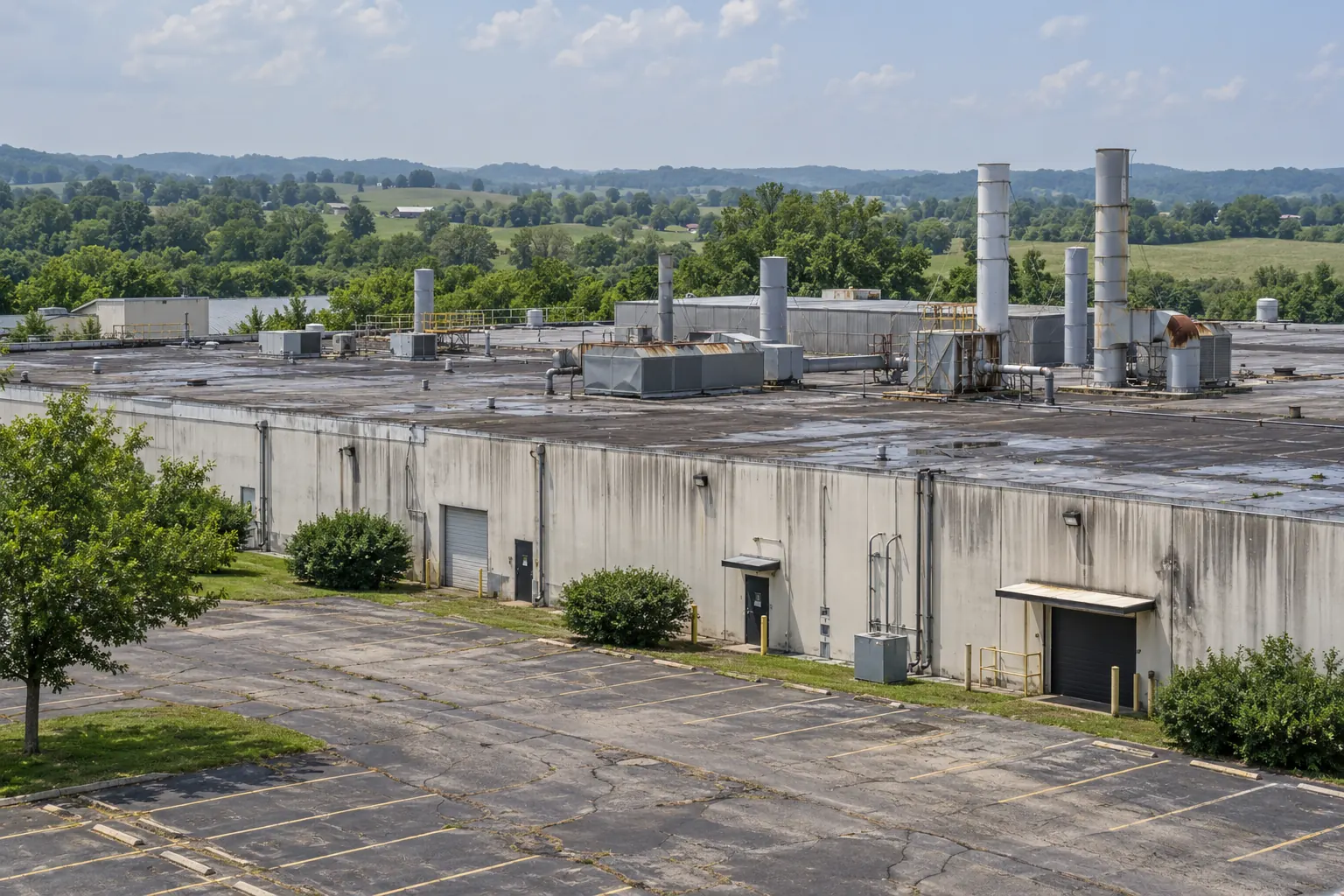
Long panel runs over production floors get coated in zones split at expansion joints or hatches. Exhaust residue gets degreased, and condensate lines draining onto the steel get rerouted first.
Farm And Equipment Buildings
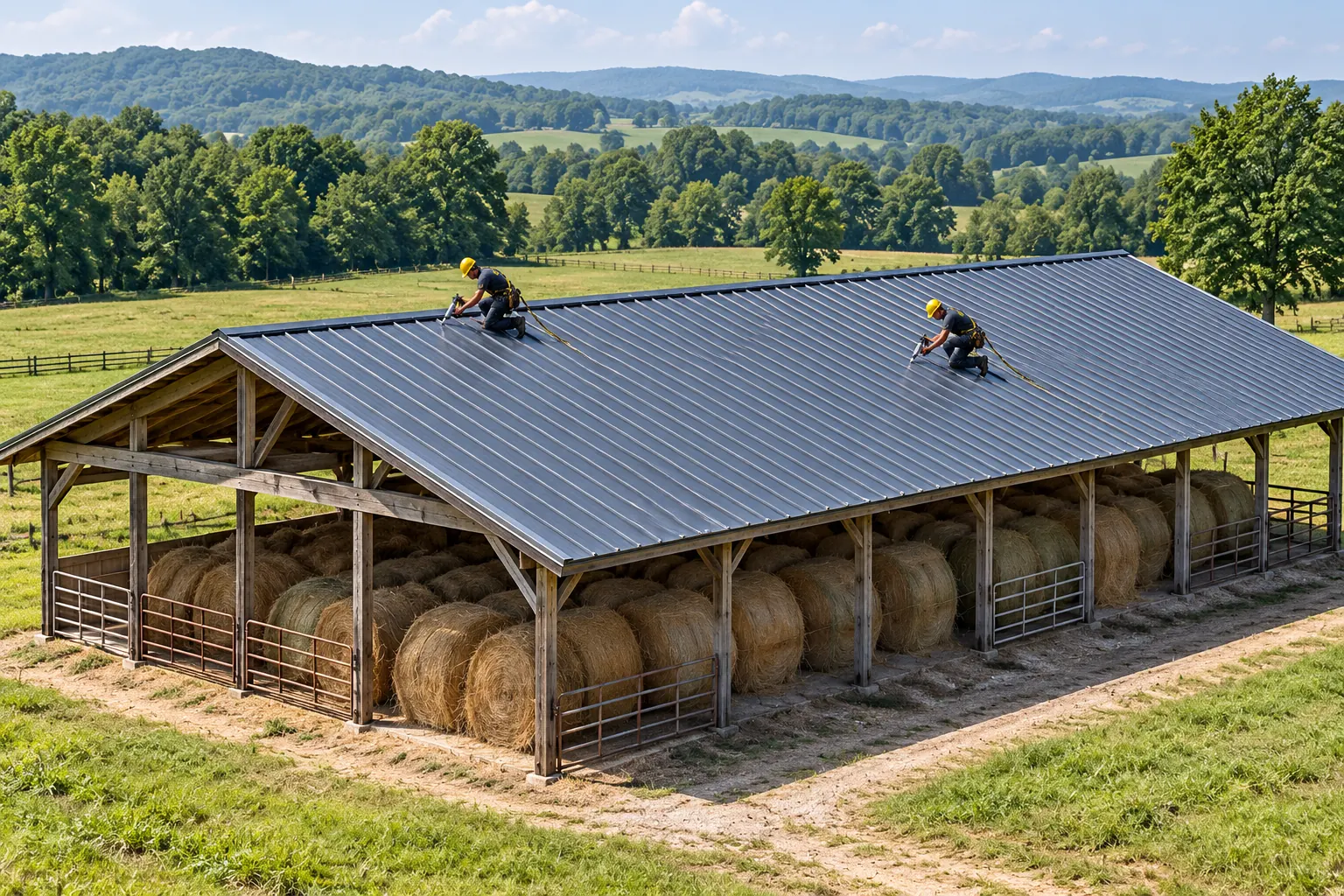
Corrugated and R-panel roofs on barns and sheds qualify while the steel keeps its thickness at the bottom of each rib. Dust and bird droppings come off in the wash before any primer.
Older Painted Shops
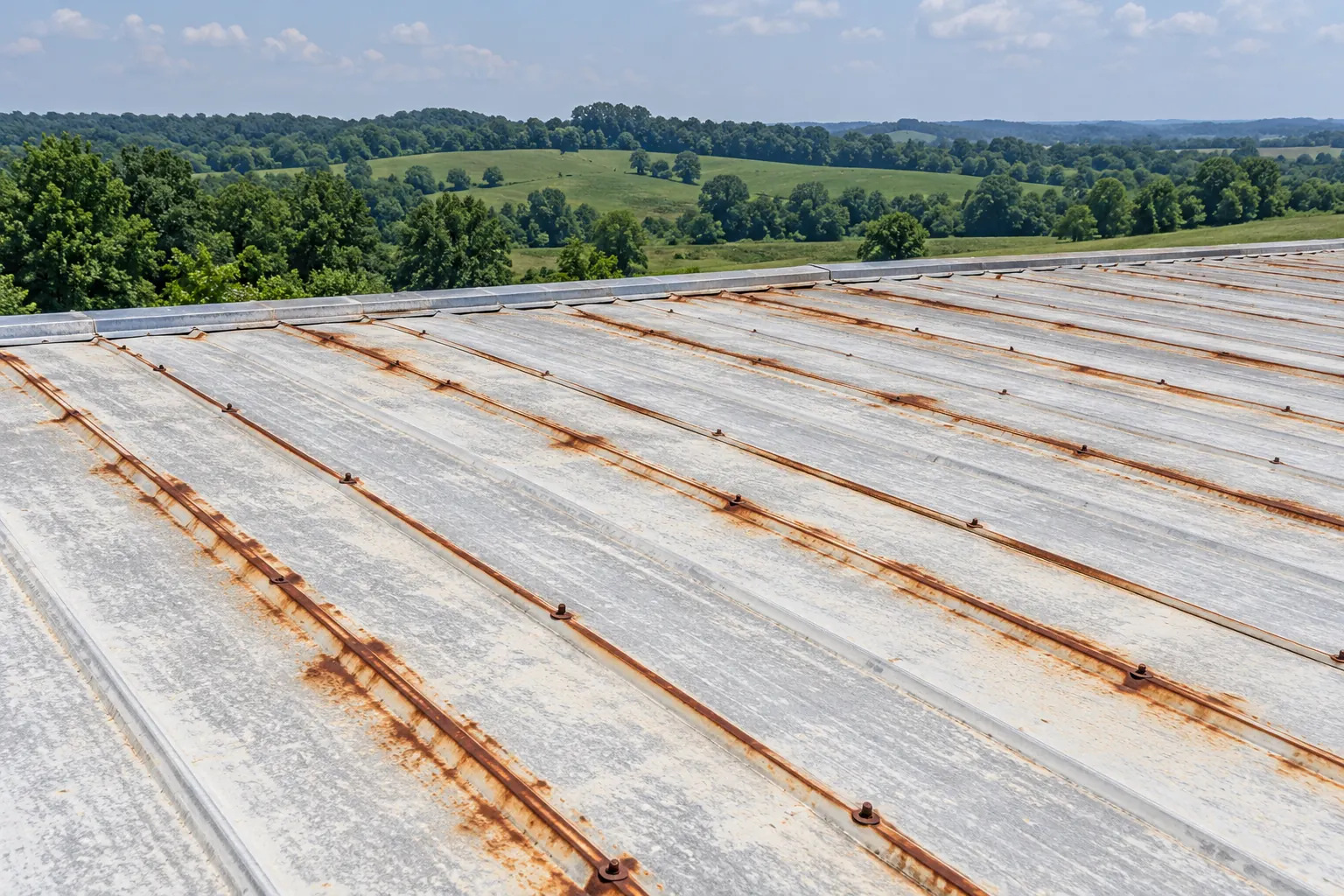
Chalked paint and orange staining are common on older shop roofs. An etching primer goes on where the factory finish has worn thin, and every fastener row is checked.
Benefits of Coating Your Roof
On a metal roof with firm panels, coating pays off in four ways. Each one rests on the inspection, since rusted-out steel has to be replaced first.
Steel Stays Put
Keeping the existing panels and purlins means the money goes into screws, primer, fabric, and topcoat instead of tear-off labor and new steel.
Building Stays Closed In
The roof stays on during the work, so rain stays off the floor below and equipment underneath keeps running.
Less Disposal
Old panels left on the building are panels kept out of the landfill, and the dock stays clear of a roll-off dumpster.
A Path To Recoat
Once the laps and screws are sealed, later upkeep means washing and a fresh topcoat over the same steel.
Rust Spreading Along The Laps?
Send photos of the worst panels, eaves, and gutters when you reach out. Rust depth at the laps decides whether the roof is coated or restored first.
Have These Ready
- Panel type, if drawings show it
- Photos of rusted laps and gutters
- Leak spots marked inside
- Plans for new rooftop equipment
Our Metal Roof Coating Sequence
Exposed-fastener and standing seam roofs follow the same five steps. What changes is where the prep hours go.
Inspect Your Roof
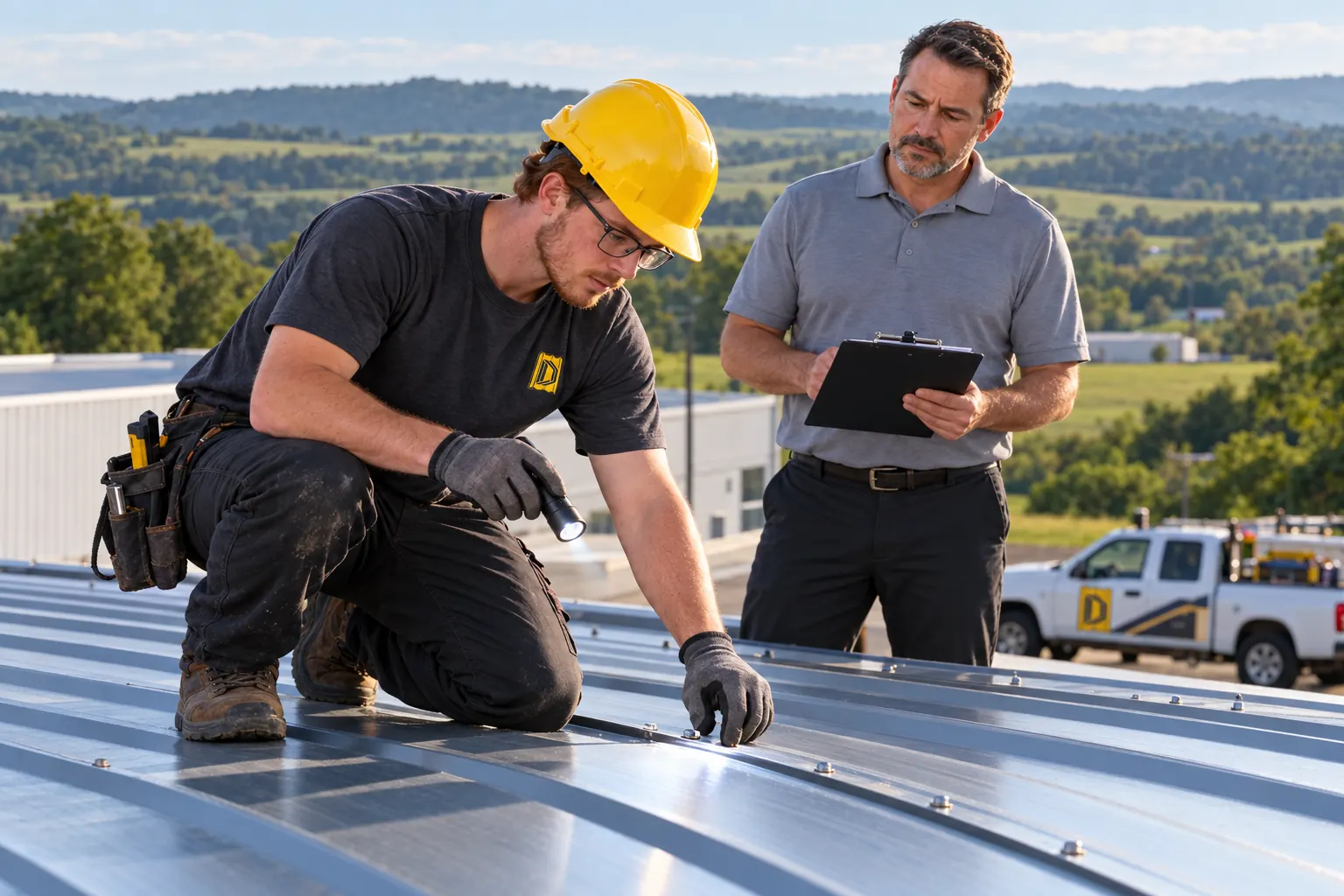
A walk along every panel run tells us the panel type, rust depth, and screw condition. We sample fasteners, check end laps for gaps, look at gutters and ridge caps, and photograph the problem spots for you.
Clean The Panels
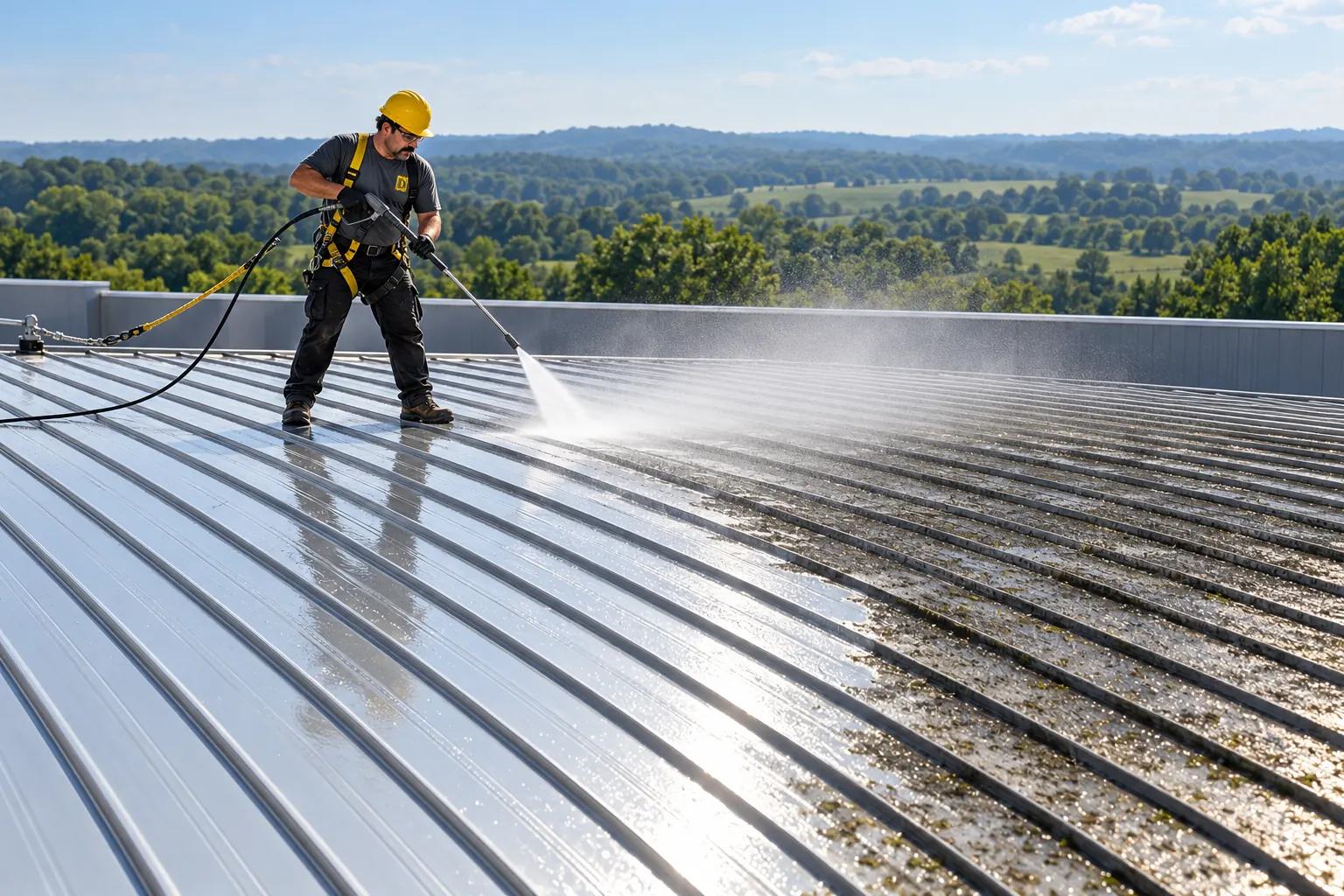
Detergent washing takes chalk off painted panels, scrubbing clears white rust at laps, and degreaser handles oily areas near vents. On cool days, drying pushes priming to the next morning.
Fix Screws And Rust
Screws with failed washers come out for oversized ones. Flaking rust is ground back and spot-primed; panels with rust bloom across wide areas get a full prime coat.
Reinforce Laps And Seams
Fabric set in base coat runs across the full width of each end lap. Side laps get a mastic or fabric strip, and opened standing seams get seam tape.
Apply The Topcoat
Rolled or sprayed, the topcoat covers the field to the thickness the product sheet calls for. Wet film readings along the ribs catch thin spots before they cure.
Other Coatings For Metal Buildings
Some metal roofs need a different finish or an added layer. These services pick up where a standard metal coating leaves off.
Silicone Roof Coating
Low-pitch runs and gutters that hold water after rain do better under silicone, which shrugs off standing water at the laps.
Silicone roof coating in DanvilleAcrylic Roof Coating
A bright white acrylic topcoat fits steeper metal roofs over hot, uninsulated shops and sheds.
Acrylic roof coating in DanvilleSpray Foam Roofing
Buildings losing heat through bare panels can take spray foam, which buries screws and laps under an insulating layer.
Spray foam roofing in Danville
Commercial Metal Roof Coating Questions In Danville
Which commercial metal roofs can be coated?
Exposed-fastener R-panel, standing seam, and older corrugated roofs all qualify once the panels are firmly attached and the rust is treated.
R-panel roofs put the prep time into screws, side laps, and end laps. Standing seam roofs hide their clips, so work centers on seam ends, penetrations, and eave trim, and the coating has to stretch where seams move most.
How do you treat red rust before coating a metal roof?
Down to firm metal, then primer. Flaking rust at laps, eaves, and fasteners gets wire-brushed or ground, the panels get pressure washed, and bare spots get a rust-inhibiting primer.
Wide areas of rust bloom get a full prime coat. Light orange staining that wipes away cleanly takes far less work than rust that lifts in flakes.
When is the best time of year to coat a metal roof near Danville?
Late spring through early fall, when panels run warm and dry spells last longer. Acrylic needs that warmth; silicone and some urethanes reach into cooler spring and fall days.
Metal cools fast after sunset and collects dew, so mornings start once the panels dry and work stops early enough to skin over before evening. Winter is for leak repairs at screws and laps.
What are the steps in a metal roof coating job?
Six, in a fixed order: inspect, clean, repair, prime, detail, and topcoat. The inspection covers every panel, lap, fastener row, gutter, and curb.
Cleaning removes chalk and loose rust. Repairs cover screws, panels, skylight panels, and closures, and primer is matched to bare, galvanized, or painted steel. Details are sealed before the field is coated and checked with a wet film gauge.
What do Danville owners need from zoning before adding equipment to a coated roof?
A check with the Danville-Boyle County Planning and Zoning office, which handles land use apart from Boyle County Building Inspection.
New rooftop units, solar racks, or raised parapets should clear both offices before the coating goes on. Curbs and supports are then set and flashed into the metal, and the whole roof is coated, new curbs included, so later mounting leaves fresh coating intact.
Price Out Coating For Your Metal Roof
Request a free ballpark estimate with the roof size, or call and describe the panels, screws, and rust you see from the ladder.